
Designing Tomorrow (Part 1): Why Digital Experiences Need a New Blueprint
Insights
Digital expectations are accelerating, pushing brands to shift from feature‑led products to fluid, anticipatory, and trust‑driven experiences across all channels.Hyper‑personalization is evolving from one‑off tactics to real‑time, end‑to‑end adaptive journeys, powered by interoperable data and AI with explainability built in.Wearable‑first spatial interactions (AR/XR) are emerging as a mainstream interface paradigm, enabling persistent, multimodal, hands‑free digital experiences.Modular, composable architecture is becoming the enterprise default, enabling faster releases, cleaner governance, and independent evolution of key services.Accessibility and sustainability are now non‑negotiables, with global regulations and performance expectations shaping digital design standards.Visual design is diverging between bold minimalism and expressive maximalism—both valid when anchored in clarity, accessibility, and performance.
🔊 Listen to this article!
2026: Designing for a world in motion
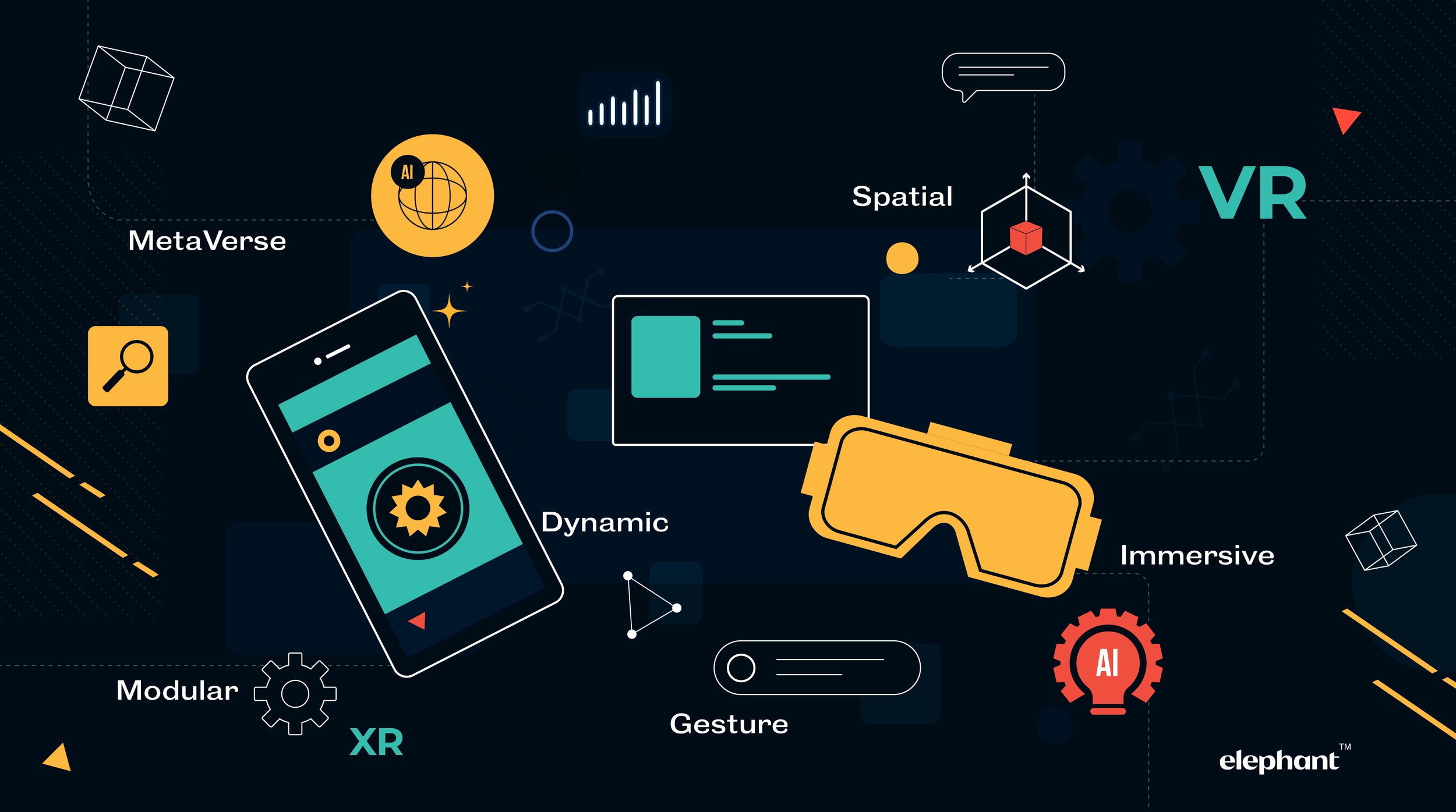
The way people interact with digital products is changing faster than organizations can re‑platform. Competing on features alone is no longer enough; brands now win on fluidity, intelligence, and trust across every touchpoint. Customers expect journeys that feel anticipatory, not reactive—adaptive, not static—and coherent across contexts and channels.Industry signals point to a clear trajectory:Hyper‑personalized omnichannel experiences drive loyalty and revenue when powered by real‑time data and AI.Immersive, spatial interactions are moving from novelty to necessity as wearable AR and XR mature.Modular architectures outpace monoliths for speed, resilience, and continuous change.
Elephant has spent over three decades shaping brands, products, packaging, and retail experiences in India and beyond, and the digital product experience vertical builds directly on that foundation. At Elephant, technology is more than a delivery layer; it is a design instrument—embedded in research, validation, and decision‑making from day zero so teams can move from opinion to evidence long before a single line of production code is written.What is driving the next phase of digital experiences
Hyper‑personalization and real‑time data
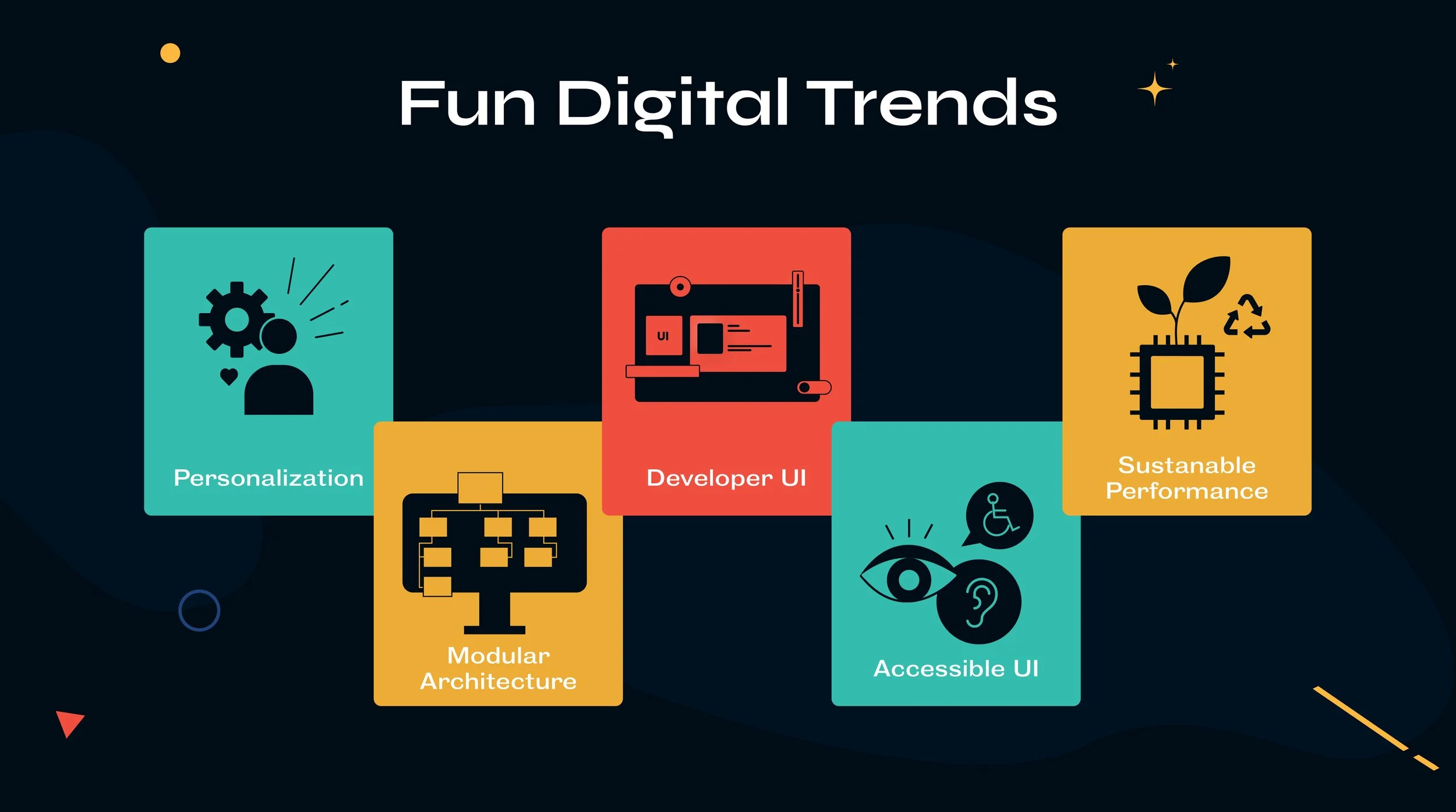
Personalization is shifting from disconnected tactics to end‑to‑end orchestration—interfaces that adapt content, offers, and UI states in real time. Organizations seeing step‑change value are re‑architecting workflows, not just installing tools: modular content, interoperable data, and explainability patterns that let users understand and correct AI actions when needed.Whether it is context‑aware onboarding for banking customers, adaptive guidance for patient portals, or real‑time offers inside FMCG loyalty journeys, the winners are designing for information that moves at the speed of a customer's day.Immersive, spatial design: wearable AR as trajectory
Smartphone AR is hitting practical ceilings: limited field‑of‑view, transient framing, and fragile tracking. The wearable wave—XR headsets and smart glasses—brings persistent, hands‑free overlays and multimodal input (voice, hand, gaze), with 2025 already a tipping point as Android XR, Galaxy XR, and new developer tooling lower barriers to building glanceable spatial UI. Analysts expect smart glasses to mature significantly by 2027–2030, with logistics and enterprise pilots already underway.From automotive ergonomics validation in VR and service guidance via AR overlays to retail planning in FMCG and medical device prototyping in healthcare, immersive tools are becoming decision frameworks, not just demo reels.Modular, backend‑first architecture
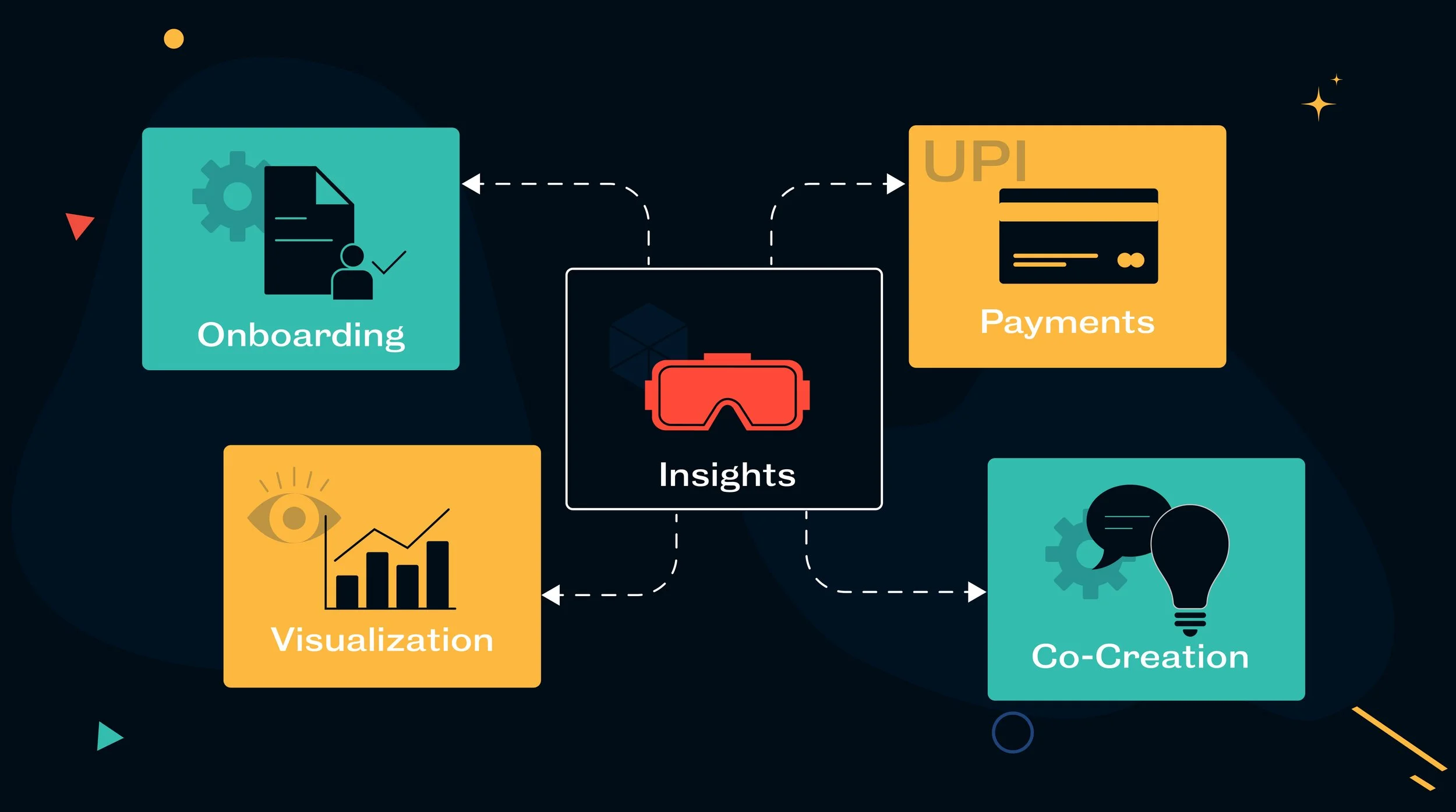
Composable and MACH-style architectures have moved into the mainstream as enterprises look for speed without sacrificing governance. Treating features as services with clear contracts, SLAs, and observability unlocks reuse across journeys instead of building one-off stacks. In BFSI, modular onboarding and payments simplify compliance updates; in healthcare, services for patient accounts and appointments evolve independently; in FMCG and automotive, storefront or configurator features can ship without touching the core.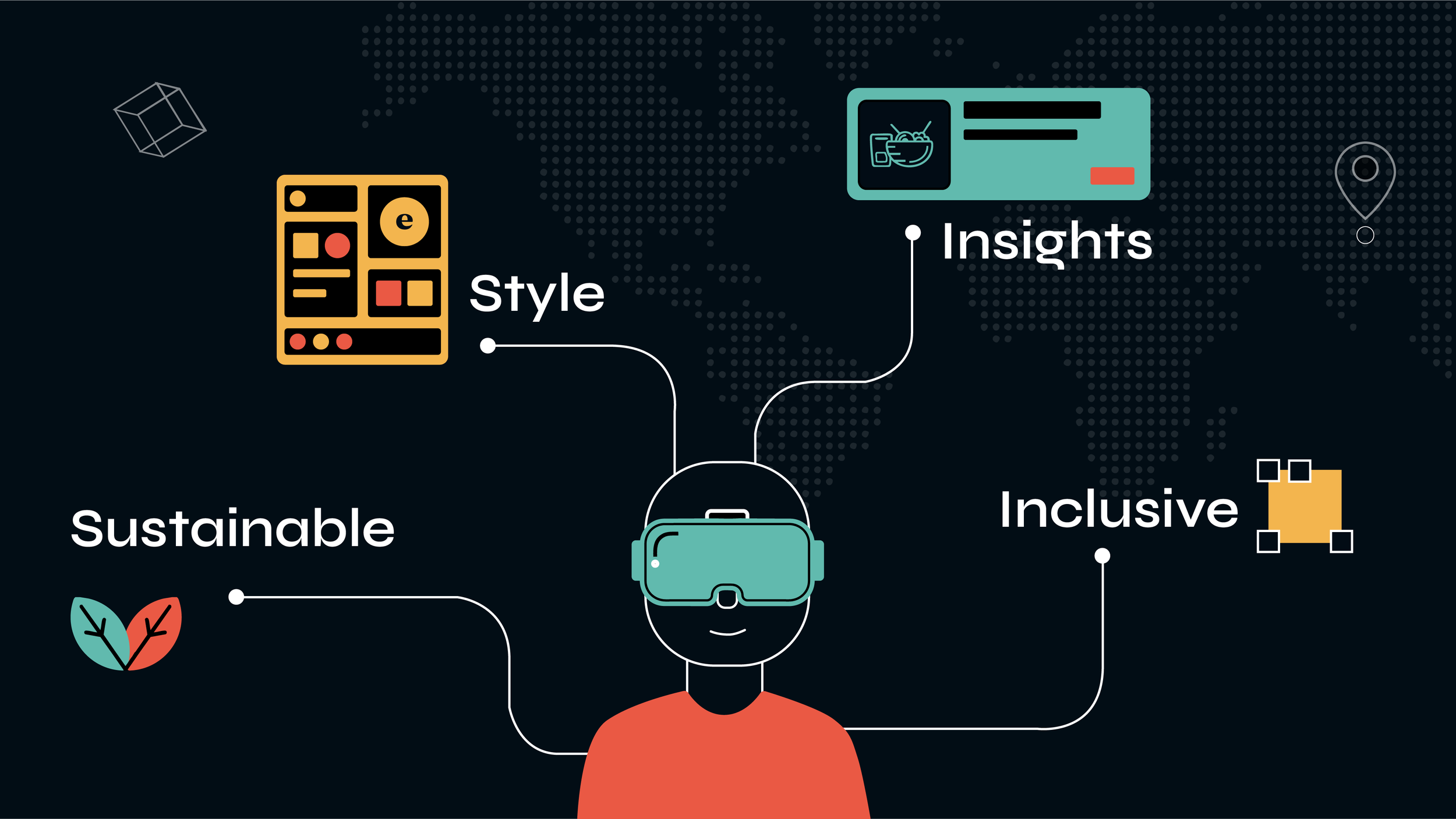
Inclusive design and sustainability
Accessibility has become a legal, reputational, and business imperative, with regulations like the European Accessibility Act and standards such as WCAG 2.2 and ISO/IEC 40500:2025 tightening expectations on digital products. Digital sustainability—page weight, energy‑aware hosting, and efficient rendering—directly affects performance and trust, especially at scale.Clear contrast, generous target sizes, motion-safe transitions, and inclusive voice or assistive options are now table stakes across banking, healthcare, and mass-reach consumer experiences.Aesthetic duality: bold minimalism ↔ expressive maximalism
Visual language in 2025–26 is pulled between bold minimalism for clarity and expressive maximalism for warmth and personality. Both can perform when anchored in accessibility and performance rather than decoration alone.
Minimalism keeps high-stakes flows such as banking and healthcare legible, while expressive maximalism brings FMCG and automotive experiences to life without needless UI bloat.
What this means for Elephant (and what comes next)
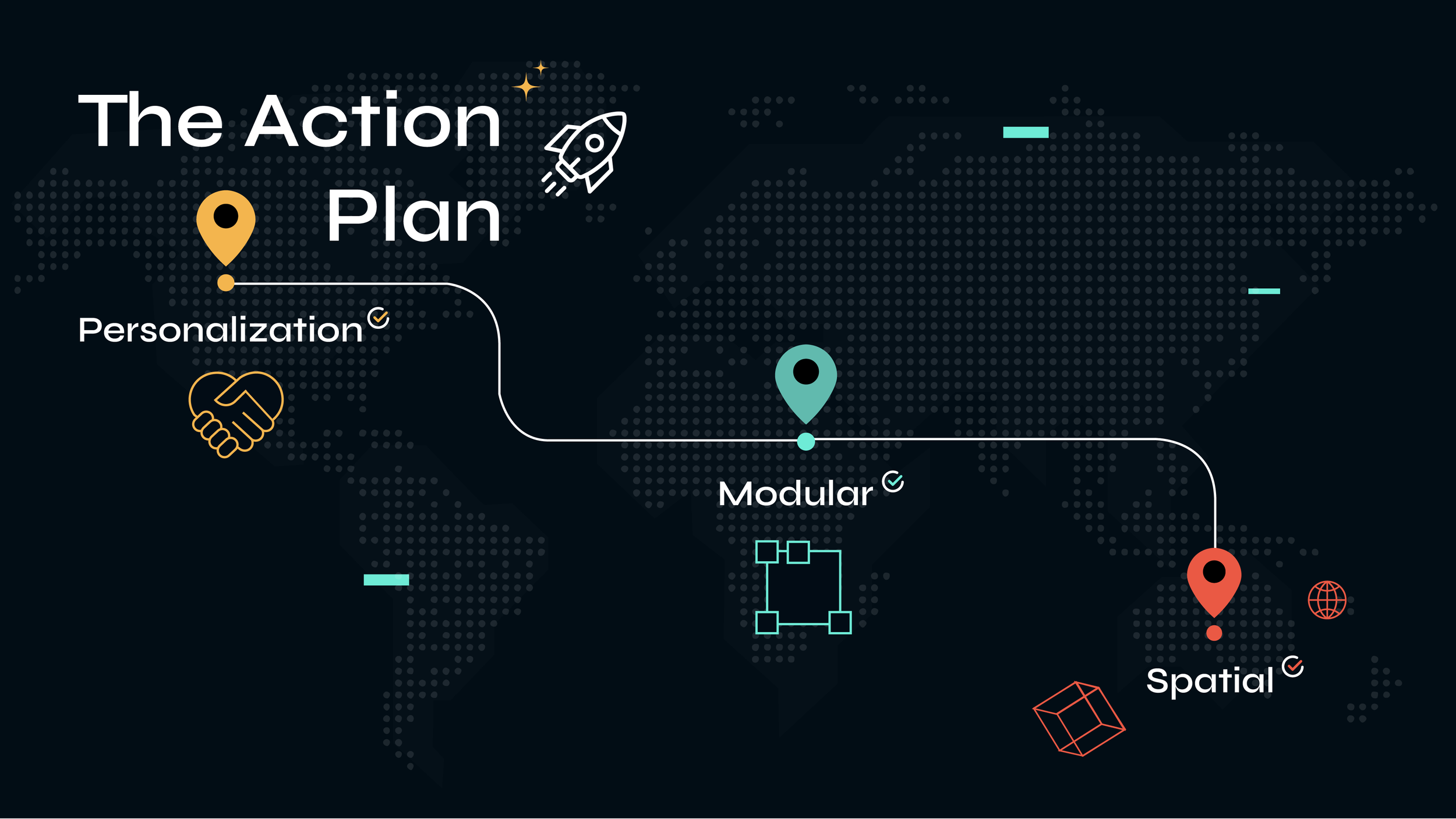
These forces are resetting what “good” looks like in digital products—from how systems are architected to how brands express themselves on screen. For Elephant, they are not abstract trends but constraints and opportunities that already shape projects across sectors. Part 2 of this series opens up Elephant’s response: a Digital Products Microsite of deployment‑ready modules, immersive design workflows using VR and AR, and a co‑creation model that helps teams move from idea to impact faster.








Shaping the Designer