
Designing Freedom
Insights
India’s national identity was rapidly built through deliberate design decisions made by individuals and teams, not by a single authority.The flag, emblem, and Chandigarh each evolved through research, iteration, and collaboration under the pressure of a newly independent nation.Design institutions like NID were created to train future generations to continue shaping India’s visual and cultural identity.The story shows that meaningful design—whether for a nation or a brand—comes from thoughtful craftsmanship, revision, and the power of symbols to create a shared sense of belonging.
🔊 Listen to this article!
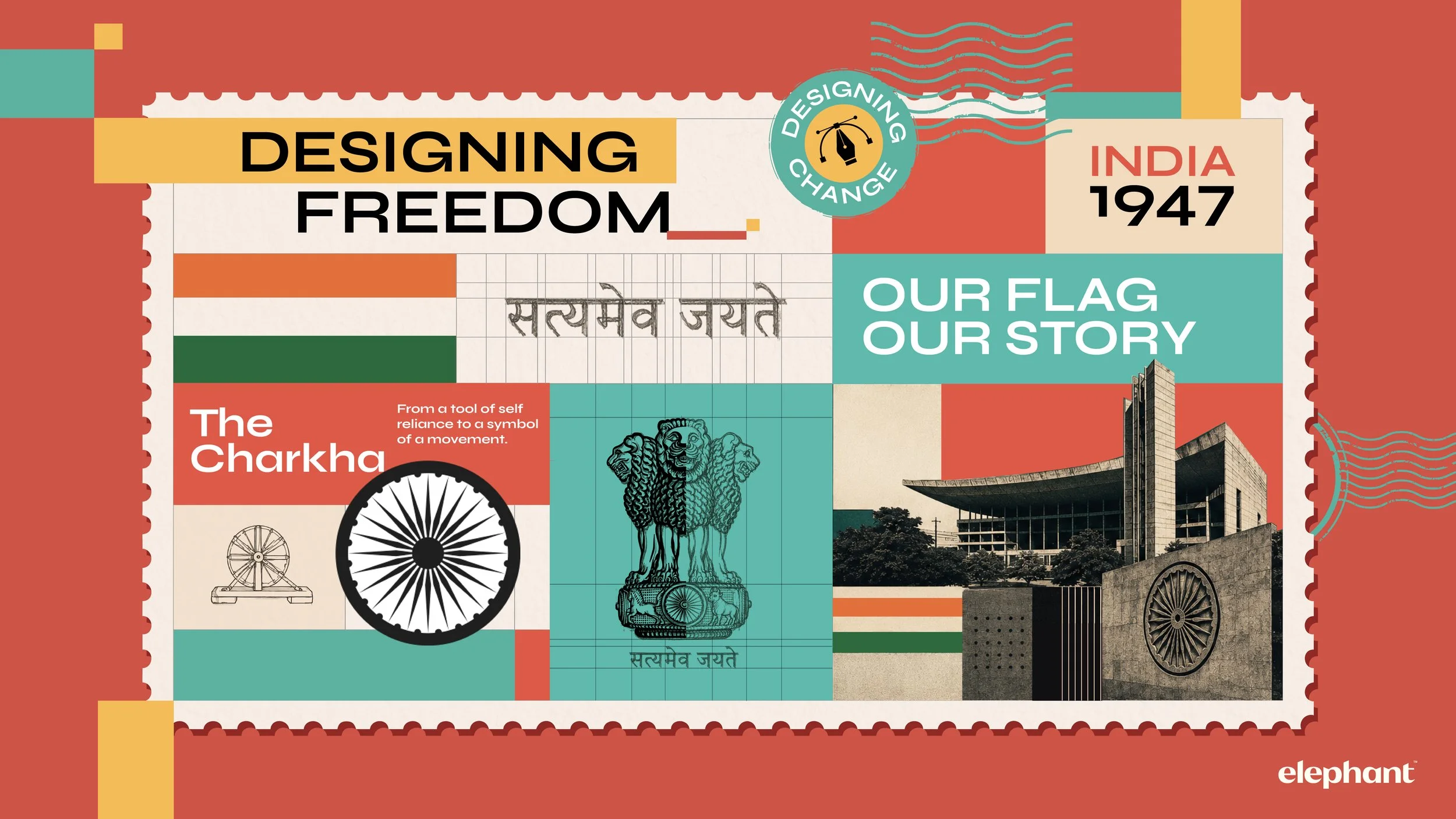
On 15 August 1947, India became a country without a single visual symbol to call its own. There was no flag flying over Parliament, no seal on official documents, no capital city built for the new republic. All of it had to be made, and it had to be made fast, by real people sitting at desks and drawing boards. This is the story of a handful of them. The Flag
The tricolour started with Pingali Venkayya, a freedom fighter who had been designing flags for the movement since 1921. His early versions carried the charkha, Gandhi's spinning wheel, as the central symbol. As independence approached, the flag needed to represent a sovereign nation rather than a movement fighting for one. Surayya Tyabji made the final change, replacing the charkha with the Ashoka Chakra, the 24-spoke wheel taken from the Lion Capital at Sarnath. The Constituent Assembly adopted the design on 22 July 1947, three weeks before independence.

Three stripes and a wheel had to hold saffron for courage, white for peace, green for growth, and a chakra representing law and motion. It's worth remembering that this wasn't handed down by one office. It moved through years of iteration by people who kept adjusting it as the political moment changed around them.
The Emblem
The State Emblem has a story most people don't know. The person who actually drew it was 21 years old.

Dinanath Bhargava was a student under the painter Nandalal Bose at Kala Bhavan in Santiniketan, working on illustrations for the Constitution. Bose assigned him the task of adapting the Lion Capital of Ashoka, a 2,300-year-old sandstone sculpture, into a two-dimensional emblem for the new government. Bhargava spent three months travelling to the Kolkata Zoo to study live lions before he sketched the final version. That drawing was adopted as the State Emblem of India on 26 January 1950.

A national symbol usually gets talked about as if it descended fully formed from a committee. This one came from a young art student with sketchbooks and a zoo pass. The craft was personal, specific, and slow.
Chandigarh
Partition took Lahore away from Punjab overnight, and the state needed a capital that didn't exist yet. Albert Mayer drew the first master plan in 1949. Le Corbusier joined later, working alongside Pierre Jeanneret, Jane Drew, Maxwell Fry, and a team of Indian architects that included M.N. Sharma and Urmila Chowdhury, among others.

Nehru gave the brief. He wanted a city, in his words, unfettered by the traditions of the past. But the plan, the buildings, the grid of sectors, came from this larger team working through years of drawings and site visits. Nehru also suggested the Ashoka Chakra as a motif for the city, and it appears carved into the Martyrs' Monument inside the Capitol Complex. The same symbol from the flag ended up carved into a building four years later, carried forward by a different set of hands.
Training the Next Generation
Once the country had its symbols, it needed people who could keep making them. The government commissioned Charles and Ray Eames to study India's design needs and recommend a way forward. Their India Report led directly to the founding of the National Institute of Design in Ahmedabad in 1961.

NID trained the generation of designers who would go on to shape Indian visual identity for decades after independence itself. Elephant's own founders came out of that same institute, graduating in 1989 and starting the studio a few months later with nothing but a rented room in Pune and a shared conviction that design deserved to be its own profession in India. 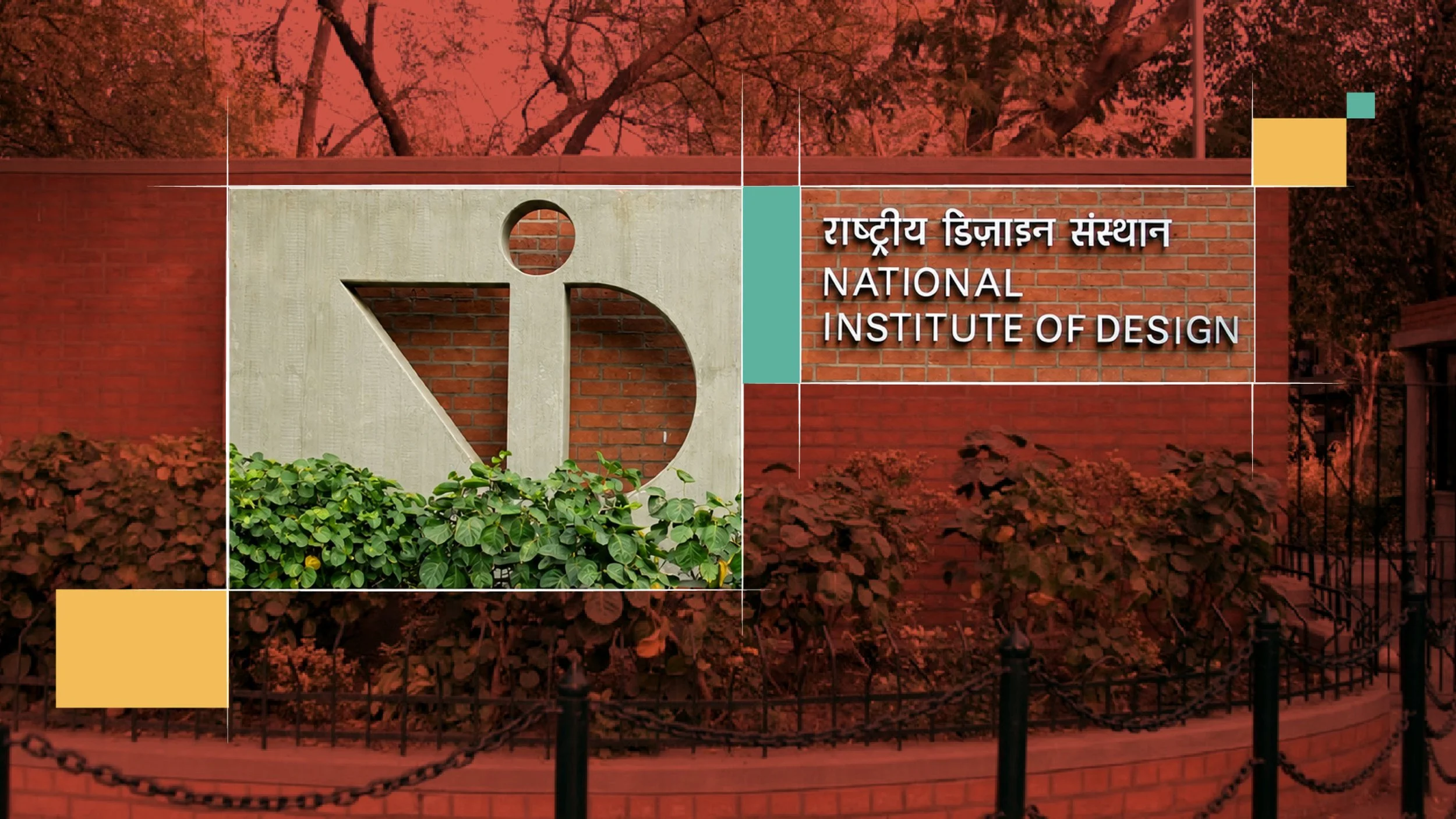
What This Means for Brand Work
Herbert Simon, the interdisciplinary scholar who spent as much time thinking about design as about decision-making, defined it plainly: everyone who devises courses of action aimed at changing an existing situation into a preferred one is a designer. A flag, an emblem, a city plan, a design school, each one was a course of action aimed at turning a colonized, fractured territory into something people could recognize as theirs.

Benedict Anderson's idea of the "imagined community" adds the other half of the picture. Anderson argued that a nation exists because millions of people who will never meet each other still carry a shared image of belonging to the same thing, and that flags, anthems, and emblems are the technology that produces that image.

India had to manufacture this image, fast, out of a tricolour, a lion capital borrowed from a 2,300-year-old pillar, and a city built where nothing stood before. Three separate people made three separate calls under deadline pressure, and the result now reads as timeless.

Every one of these symbols came from a specific person's hands. A freedom fighter reworking a flag over years. A 21-year-old with a sketchbook. A team of architects translating a brief into concrete and sandstone. A design institute training the next set of people to do this work.

A brand identity project runs on the same mechanics, at a smaller scale. Someone has to sit down and decide what a shape, a colour, or a mark should carry for people who will never meet the person who made it. It takes the same patience Bhargava had at the zoo, and the same willingness to keep revising that Tyabji had with the flag days before it mattered most. That's the tradition a design studio inherits every time it takes on a new identity brief, whether the client is a nation or a company. 











Shaping the Designer