
Framework for Managing Design
Insights
A vague brief turns design review into a referendum on personal taste.The quality of the design depends partly on the quality of context the business gives the design team.Every new agency relationship can reset the organisational knowledge that took the last project to build.The right stakeholder in the room early can save months of negotiation later.A prototype can expose an organisational problem while it is still cheap to fix.The designer’s job is to solve the problem; the manager’s job is to make sure they understand the problem worth solving.A beautiful concept can still become a poor product somewhere between approval and production.A design project has maximum impact if it enhances the organisation’s ability to make better design decisions next time.
🔊 Listen to this article!
Hello Manager, How to Not Ruin a Design Project
A practical framework for CEOs, CMOs, Brand & Product Managers who commission design. There is a peculiar moment in every design project. The business team turns around and finally says: “We need new design.” It is usually a moment of optimism. A new product, a new brand or even a new market opportunity. This could be a declining category that needs reinvention, or a business that wants to look and perform differently. Recognising the need for design is already a good management decision. But this is also where many design projects start to go wrong. Not because the designer cannot deliver, but because the organisation doesn’t know how to commission, manage, evaluate and protect design. Over 37 years of practising design, I have seen the same patterns repeatedly: The brief is vague. A messy process of appointing a specialist designer or consultant. The design team is given insufficient exposure to the business. The CEO likes blue, marketing has the prescription ready, while procurement wants it to be done cheaply. And sales! They always want something that has worked before. Everyone wants to give random feedback, yet nobody agrees on what success means. Six months later, the original initiative has been negotiated into oblivion. And just like that, many projects are routinely put on hold. More importantly, opportunities are also lost. Managers, while optimistic, find themselves at a loss because they lack a blue book in their repertoire to handle the design, and the design team. Here is a simple 4-point F I E R framework that I have developed for managers who genuinely wish to use design to create a distinct competitive advantage. 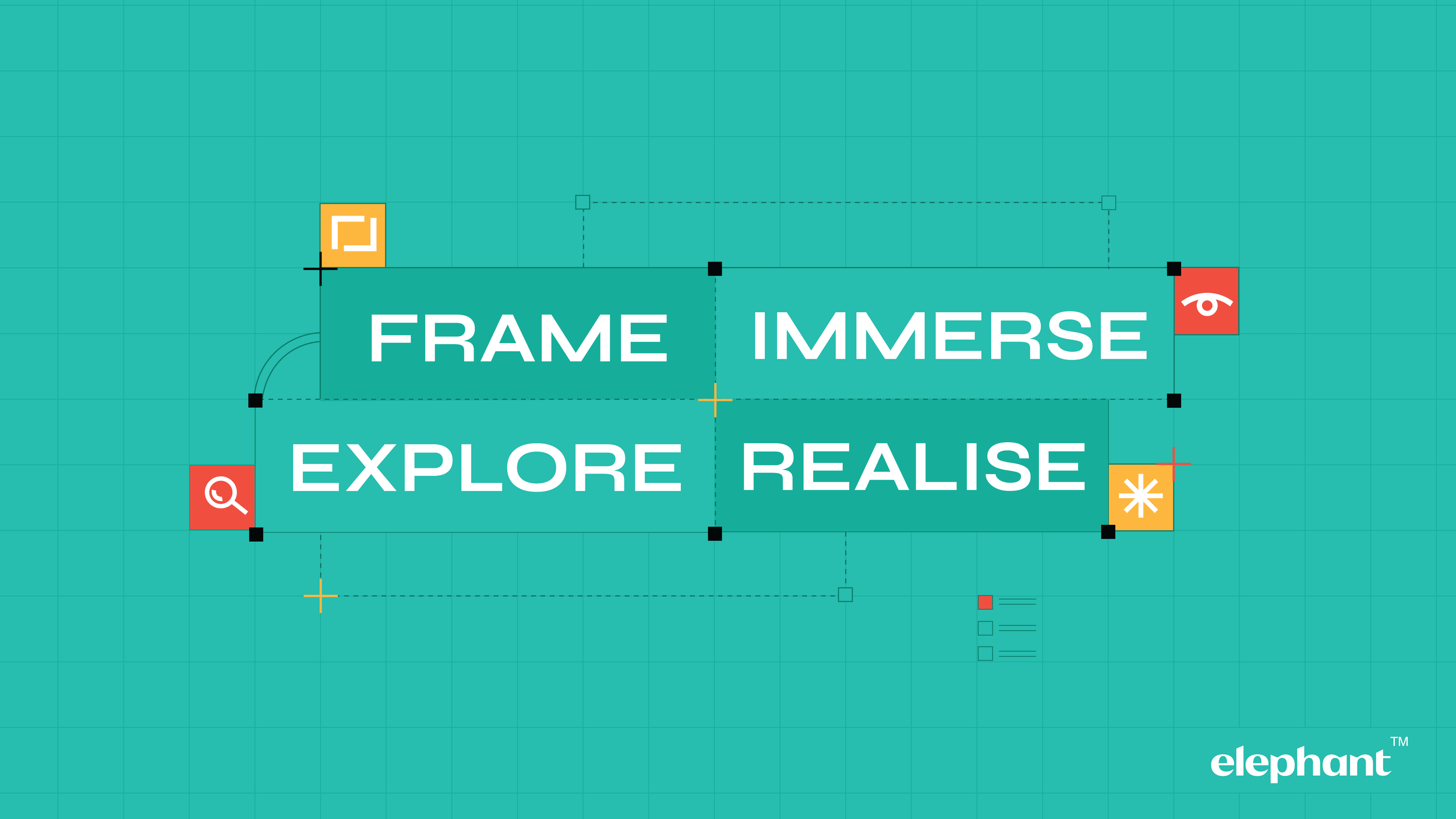
Don’t think of it as a design process. This is management discipline, aimed at getting the best out of design. It is based on time-tested, proven tenets that you as a business manager cum leader can use to commission a design project. Frame the problem.Immerse in the reality.Explore the possibilities.Realise the opportunity.
Let us understand each of the tenets. 01 FRAME
Before choosing a designer, understand yourself as a Brand, Marketing or Product professional. 1. What are you good at? Start with your own organisation. Do you have strong technology, or brand equity? What about distribution, manufacturing, customer relationships, market & segment data? Is your service or product unique, what is your USP? What are your known shortfalls? Don’t ask the design team to compensate for something you haven’t understood about yourself. Design amplifies capability. It rarely substitutes for it.
2. What is the real challenge? “We are dated.” “Make it appear premium.” “Young people don’t like us anymore.” “Poor shelf throw at retail level.” These are symptoms. Not proper briefs. Define the problem behind the request. Is the challenge: Relevance? Differentiation? Usability? Cost? Perception? Adoption? Trust? The better the definition of the problem, the better the design opportunity. 3. What kind of design specialist do you actually need? A brand strategist company isn’t necessarily an industrial design firm or one who can design your tech platform. Maybe, you have multiple design challenges that need addressing, and need someone to handle your brand, package, and product. Or maybe you only need someone to help with expressing your brand at retail points. Or you want someone to handle the service and digital design aspects – the list is exhaustive. Choose the right design partner for your specific design needs. Choose the capability before choosing the personality or company. 4. Define success parameters before design begins. What makes a project successful? Is it a possible gain in market share? Premiumisation? Conversions? Ease of use? Cost reduction? Brand recognition? Customer preference? Manufacturing efficiency? Note it down.
This becomes the project’s Reason to Believe. 02 IMMERSE
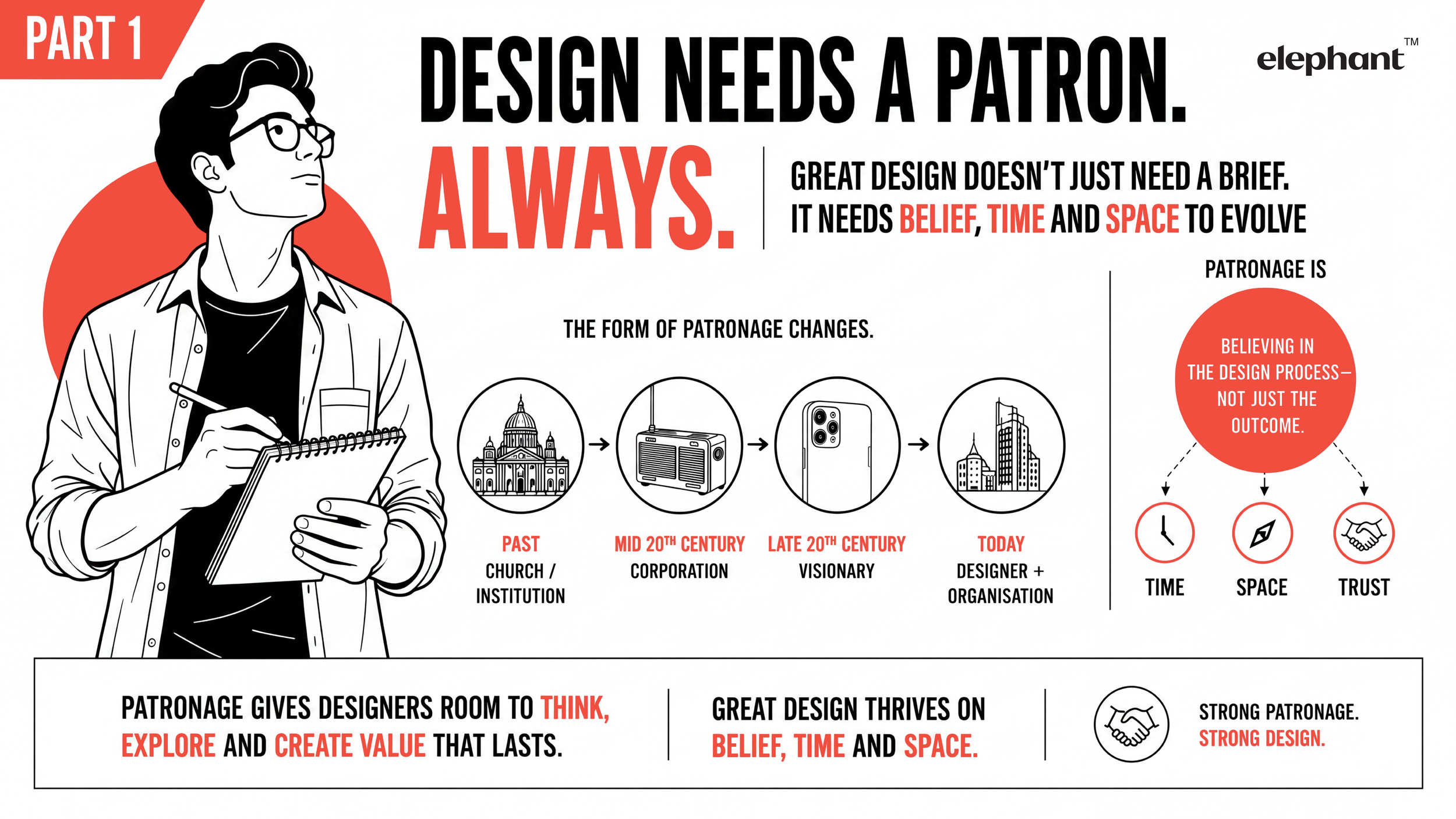
Give the design team the ammunition to solve the problem. 1. You are choosing a design partner, not a vendor. (whichever way your Purchase folks define it, your intention must nurture a long-term relationship) If the project matters, don’t run a beauty contest between ten agencies. Shortlist one or two genuinely capable teams. Ask yourself: Could we work with these people for five years? The greatest value of a design relationship often appears after the first project—when the designer begins to understand the organisation, its customers, its technology, its culture and its ambitions. Braun is a powerful example. Dieter Rams led Braun Design for more than three decades, helping establish a coherent philosophy of simplicity, clarity and functionality that became part of the brand’s DNA. Agency hopping DOES NOT create design legacy. Sustained, long-term engagements do. 2. Train the design team. Yes. Train them. Don’t assume the design team knows your business because they have studied the category. Immerse them through: Business historyMarket realitiesCompetitionTechnologyManufacturingAll stakeholdersCustomersSales channelsPrice pointsResourcesConstraintsInternal politicsFailuresEarlier attemptsAmbitions
Avoid armchair assignments. Take them to the factory, Into the showroom, on sales calls and into people’s homes. A design team with context is an effective design team. 3. Build an Alignment Matrix. This is one of the most important design management tools in the process. Place the challenge against the parameters that matter. For example: 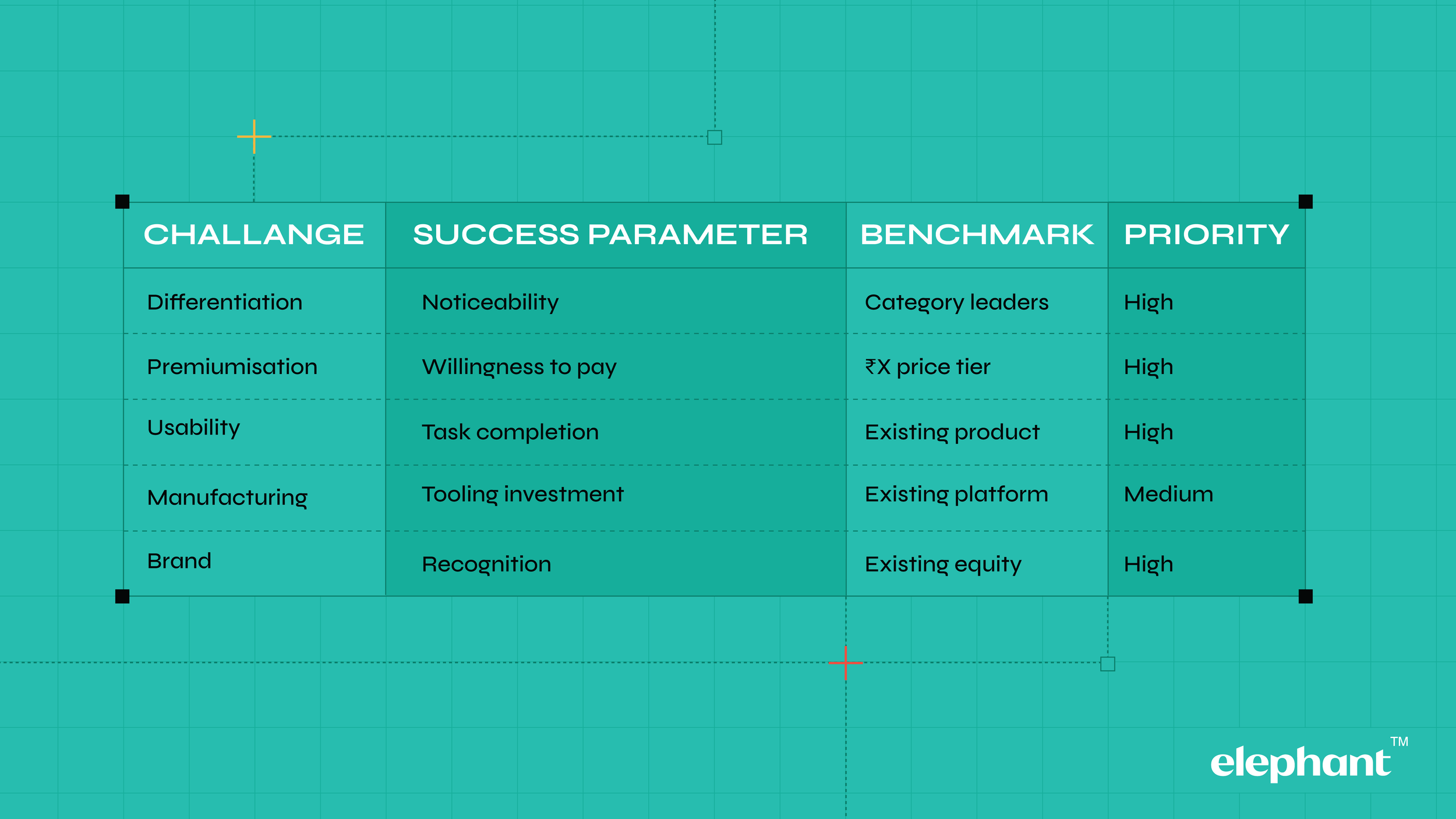
With this, we ensure that design isn’t being judged by someone’s random personal taste. It is being judged against agreed-upon objectives. 4. Allow exploration. This is where many organisations become impatient. “When will they show the final design?”
Most managers want the first round of ideas to work. But design needs room to discover. Discover ideas, materials, stories, expressions, dead ends and even failures. Give the team enough time to explore, and enough envelope to converge. Speed is useful. Premature closure or shorting the process is not. 5. Don’t change your hat. This may be the most important rule. When you are the business, product manager or marketing manager, behave like one. Tell the designer what matter in your business or for your service: “This will be difficult for our sales channel as they are conservative.” or, “Our premiumisation objective is being missed.” Avoid getting into areas that are not your expertise: “I don’t like this colour.” “Make the logo rounded.” “Could we include something like this? I saw it on Instagram.” Unless you are the designer, don’t become one halfway through the project. Your job is to provide the business point of view. Their job is to translate that into design. 03 EXPLORE
Make your organisation part of the learning process. 1. Get feedback mid-project - not at the end. Don’t wait until the final presentation to discover that procurement, manufacturing, service or sales has a fundamental objection. Bring the right stakeholders in at the right time. 2. Create structured cross-functional reviews. Bring together Business + Marketing + Sales + Service + R&D + Manufacturing + Procurement + Design these at the very beginning and at intervals: This is not about creating a committee. Create a learning session where everyone understands, where everyone visualises the larger picture together. This usually includes: What the problem wasWhat was exploredWhy decisions were madeWhat trade-offs existWhat remains unresolved
The design team should be in the room should be working with the organisation, not simply presenting to it. 3. Test early. Test honestly. Don’t fall in love with your PowerPoint, spreadsheet or concept video. Place prototypes in people’s hands. Test the product. Test the packaging, the interface, the service, the value perception and proposition. Do it early enough, so that failure remains affordable. Avoid rushing into production, taking shortcuts during the testing phase or ignoring test results altogether. A failed prototype is cheap. A failed launch is expensive. 4. Protect the design team when the going gets difficult. Every serious design project hits a wall. Technology says no. Manufacturing says it’s impossible. Finance may say it’s too expensive and Legal may find it unacceptable. Someone senior may change the brief or direction. This is where a good business leader earns her place in the project. Your job isn’t simply to approve the design. Your job is to remove organisational obstacles for the design team to succeed. Treat the design team as one with your team. 5. Choose the route with a Reason to Believe. At the end of exploration, don’t ask: “Which one do we like?” Ask: “Which solution has the strongest alignment with our business objectives?” and “What is the greatest evidence of it working?” Return to the Alignment Matrix. Let evidence, strategy and design judgement make informed decisions. 04 REALISE
Don’t abandon the project after the concept is approved. This is another place where good design is destroyed. 1. Take it to the conclusion. Even if it fails. A failed project can still be a highly successful organisational learning experience. This doesn’t mean that one goes full hog on investment. Realise the prototype, test it and document the failure. These are invaluable learnings at a fraction of the cost. Document: What we thought.What we tried.What worked.What failed.Why it failed.What we learnt.
Don’t throw away the learning with the failed design. 2. Build on the learning. This is how design capability accumulates inside organisations. Project 1 teaches you something. Project 2 starts from there. Project 3 goes further. Eventually, the organisation develops a design memory. That is when design stops being an external service and starts becoming an organisational capability. 3. Don’t rush production. A beautiful render is not a finished product. This is where many fail. Design process milestones and time to market many at times gets compromised when decisions are taken under pressure. Such shortcuts result in blindsiding crucial gaps, quality issues and failures. Check through high-fidelity prototypes, material analysis, tooling feasibility, production viability, assembly bottlenecks, packaging efficiency, functioning logistics, and user audits. The last 10% of design execution can determine 50% of the user’s experience across performance, quality and life of the product. 4. Lock the design. Work to achieve final design specifications from your design team. Detail documents, Master artwork, CAD data, Interaction guidelines, Colour Material and Finish (CMF) specifications, Brand guidelines, Production parameters, Version control, patent and IP registrations. Otherwise, the design will slowly mutate after launch. 5. Document the version, and the learning. Every significant design project should leave behind two things: A design asset.An organisational asset.
The first is what you launch. The second is what you learn. The second aspect hints at something far more valuable. It is called Legacy. The Business Leader has an opportunity to create design legacy. The best organisations build a relationship with design and the Design team. Braun’s relationship with Dieter Rams created a recognisable design philosophy that lasted beyond individual products and designers. Apple’s design culture similarly evolved through sustained leadership and close collaboration, particularly through the work of Jony Ive and the design team built around him. Apple’s own account describes two decades of products as the result of close collaboration across many groups. Steve Jobs’ relationship with Hartmut Esslinger’s frog is another interesting lesson. Frog’s Apple work began with the Apple IIc in the 1980s, creating a relationship in which an external design partner became deeply connected to Apple’s ambitions. Closer to home, Symphony Ltd. and Elephant team demonstrated the value of continuity in Indian product design. Elephant describes more than 35 years of continuous collaboration across Symphony’s product line, including the Diet cooler, Silenzo or the Spa range that became a major product platform in the company’s portfolio. Braun’s, Apple’s or Symphony’s success acknowledges that the precise duration of any relationship is less important. Design becomes exponentially more valuable when organisational knowledge accumulates over time. The FIER Framework is designed to provide the confidence that you as a brand or business manager need to handle design. One final thought for CEOs, CMOs and Brand Leaders. Don’t hire a designer and then design the designer out of the project. If you have chosen a good design team, give them the context, the access, the time and the trust to do what you hired them to do. Challenge them on the problem. Challenge them on the evidence. Challenge them on the business outcome. Avoid giving the design team an answer. Give them a question. Don’t hand them a presentation. Give them access to a discussion. Allow exploration, and never stop at the concept. Make it real. Motivate them and avoid substituting your personal taste for their professional expertise. Because the real measure of a successful design project isn’t about getting a nice design. It is about asking, “Did design make our business, product or brand more competitive? And did we, in turn, become better at using design?” That is when design becomes a capability. And eventually, if you do it well enough for long enough, design becomes a legacy. 










Framework for Managing Design