
The Design Paradox Part 3: India’s Biggest Design Opportunity Isn’t Better Styling.
Insights
India's strengths often operate separatelyDesign enters too lateStyling is the smallest opportunityCraft can meet advanced technologyManufacturing can become design-ledIntegration creates competitive advantage
🔊 Listen to this article!
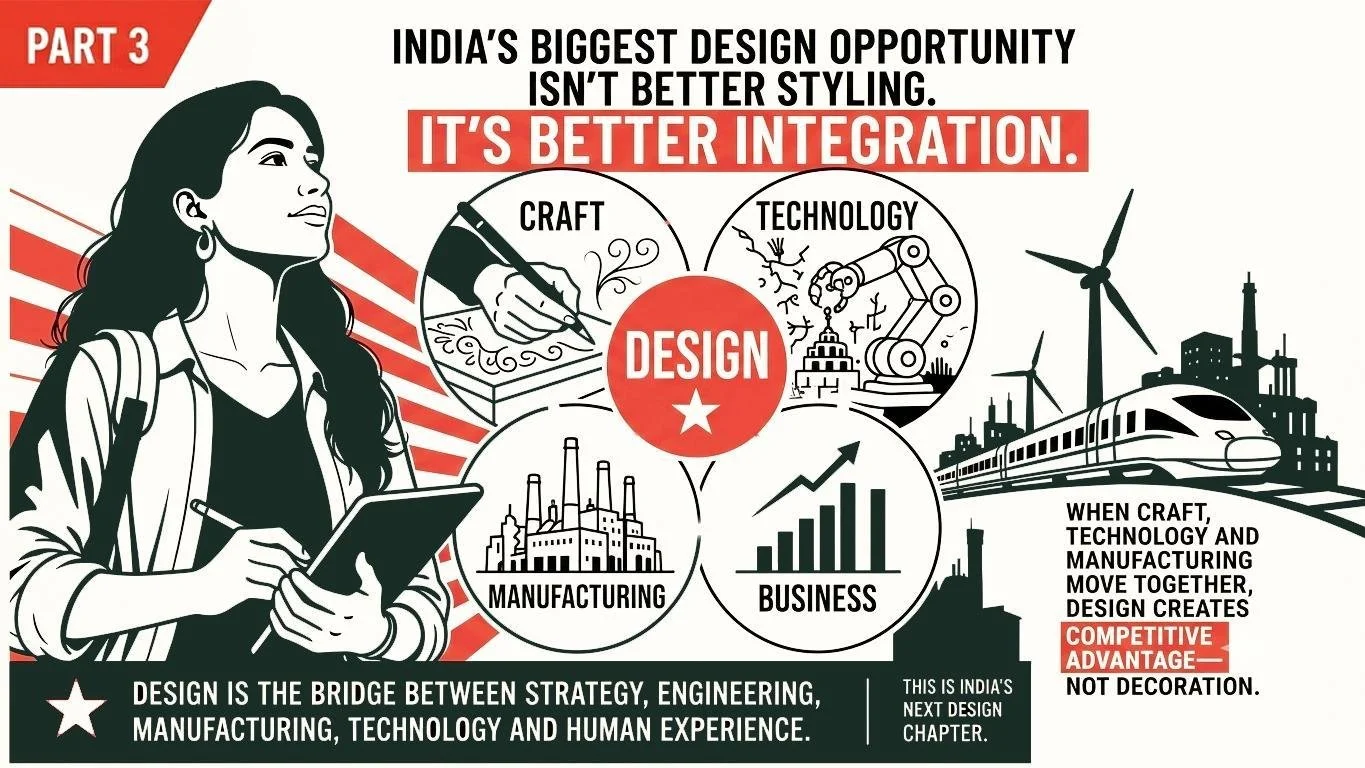
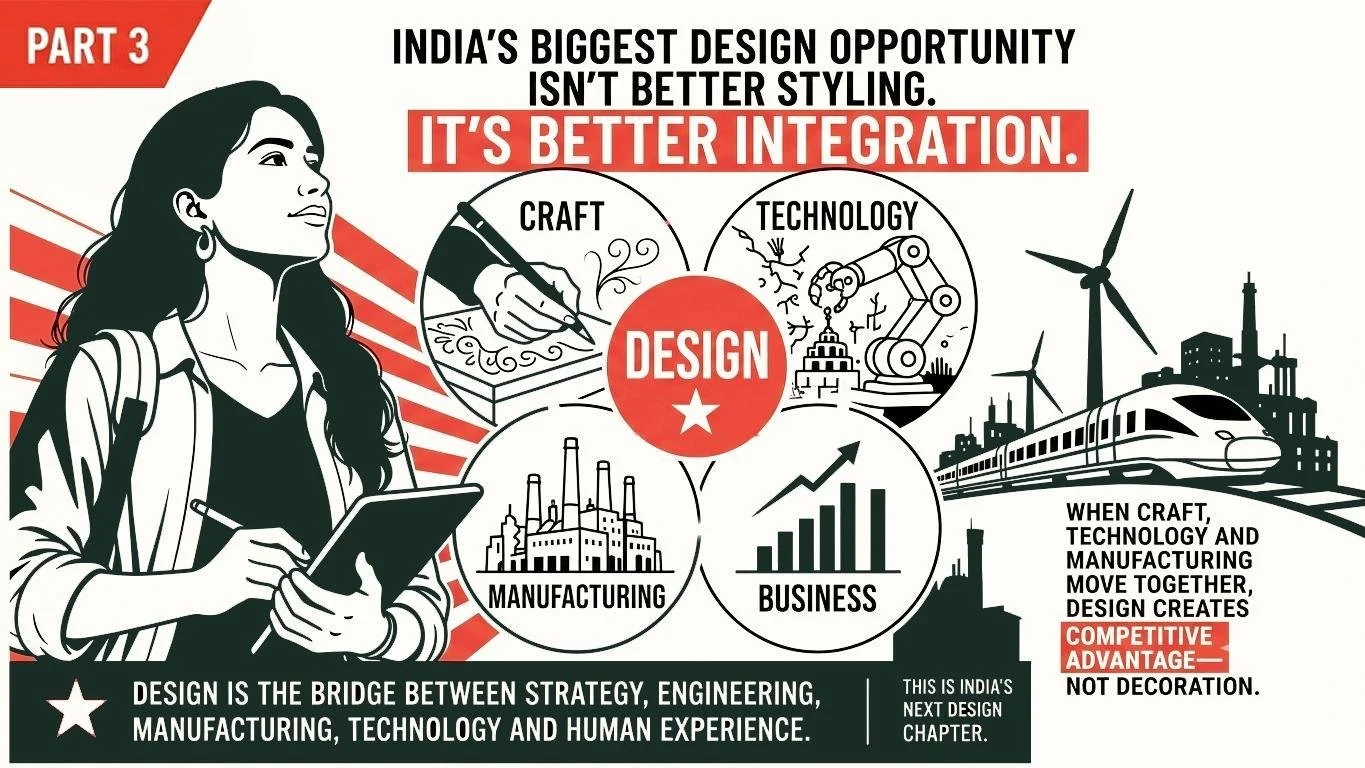
For centuries, design has evolved alongside four powerful forces: Craft.
Technology.
Manufacturing.
Business.
Whenever these four advance together, design flourishes. Japan demonstrated it via precision manufacturing dovetailing into its cultural ethos.South Korea through consumer electronics leading business to a global scale.Germany through the aesthetics of precision engineering.Italy through craftsmanship deeply engrained into their national consciousness.China utilized the economy of manufacturing at sheer scale.
India now has an opportunity to manage business value by making objects cost wise accessible. Not frugal for which we are known, but to leverage our attitude to churn out objects that bring purchase parity and accessibility to the world.

Government initiatives such as Make in India, Startup India and the Production Linked Incentive (PLI) schemes are expanding advanced manufacturing across sectors like electronics, automotive and medical devices. At the same time, India is home to globally admired craft traditions and a rapidly growing digital technology ecosystem.

Yet these strengths often operate in isolation.

Design is frequently brought in at the end, to “improve the look.”

That is a purely cosmetic use-case. The real opportunity for intervention lies much earlier in the process.
For designers, this means reputation alone is no longer enough.
Experience alone is no longer enough.
Execution alone is no longer enough. Imagine combining:
India’s textile heritage with smart materials.Traditional craft with digital fabrication.AI with healthcare delivery.Sustainable manufacturing with product innovation.Regional frugal techniques with global design thinking.
When design works with technology and production from day one, it creates a competitive business advantage.

Perhaps, this is the next chapter for Indian design: becoming the strategic bridge that connects business strategy, engineering, manufacturing, technology and human experience with the evolution of sensible products.

Design has already transformed Indian business. Now, it needs to transform the business of design. Perhaps, the key is reinventing how design delivers itself. We need an eco-system, and a state-led effort to create a multitude of home-grown brands. The craft of design will give birth to brands and design-led brands will propel a manufacturing revolution, paving a path towards global markets seeking India-designed goods, and services alike.

What other factors are holding Indian design back today?

We'd love to hear from designers, engineers, founders, marketers and manufacturing leaders.
Design Needs a Patron
The Design Paradox - PART 3 India’s Biggest Design Opportunity Isn’t Better Styling. It’s Better Integration.
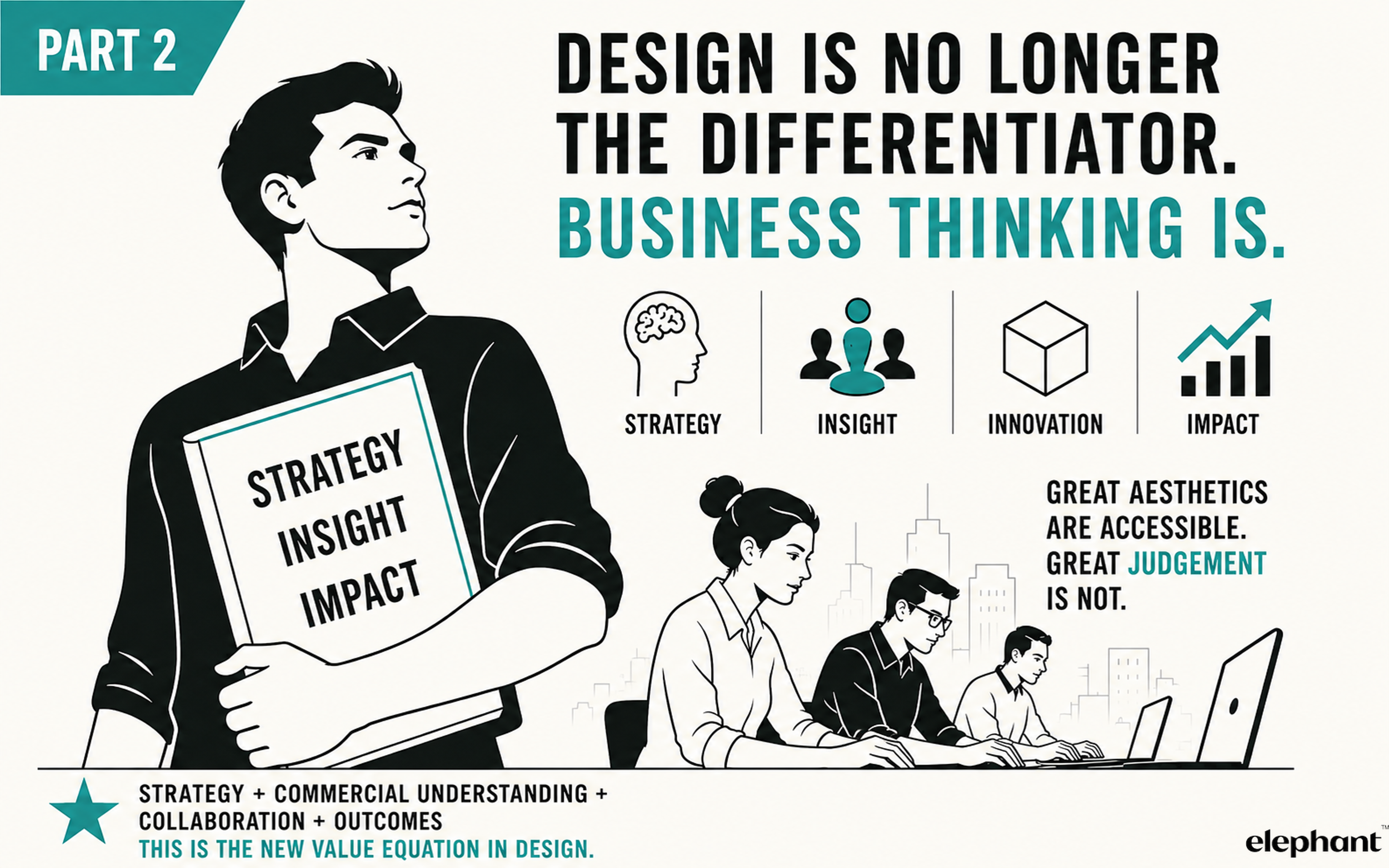
The Design Paradox - Part 2: Design Is No Longer the Differentiator
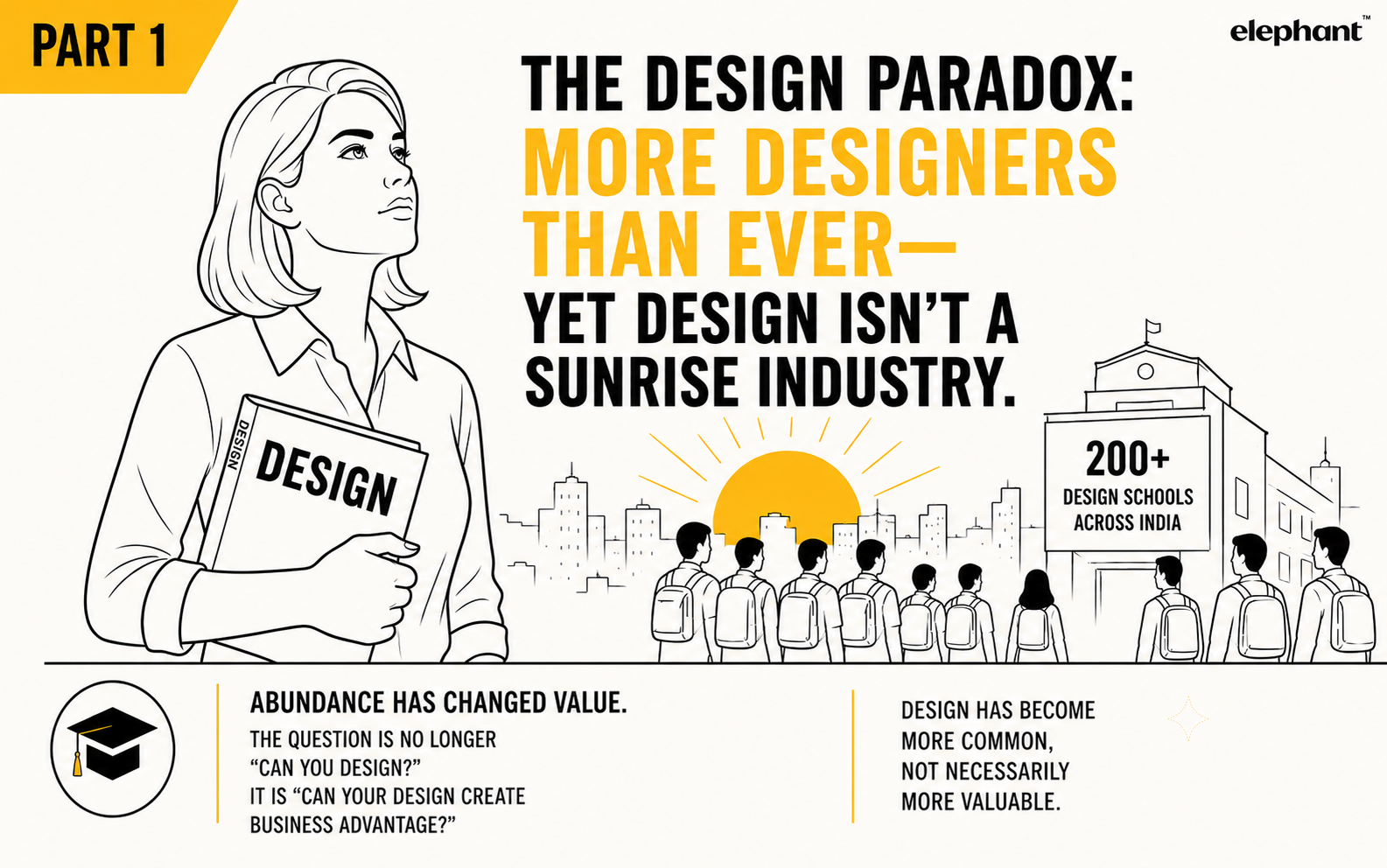
The Design Paradox - The Trajectory of India’s New Design Landscape
Designing Freedom

The Screen Is Not Enough: Why D2C Brands Are Moving Offline
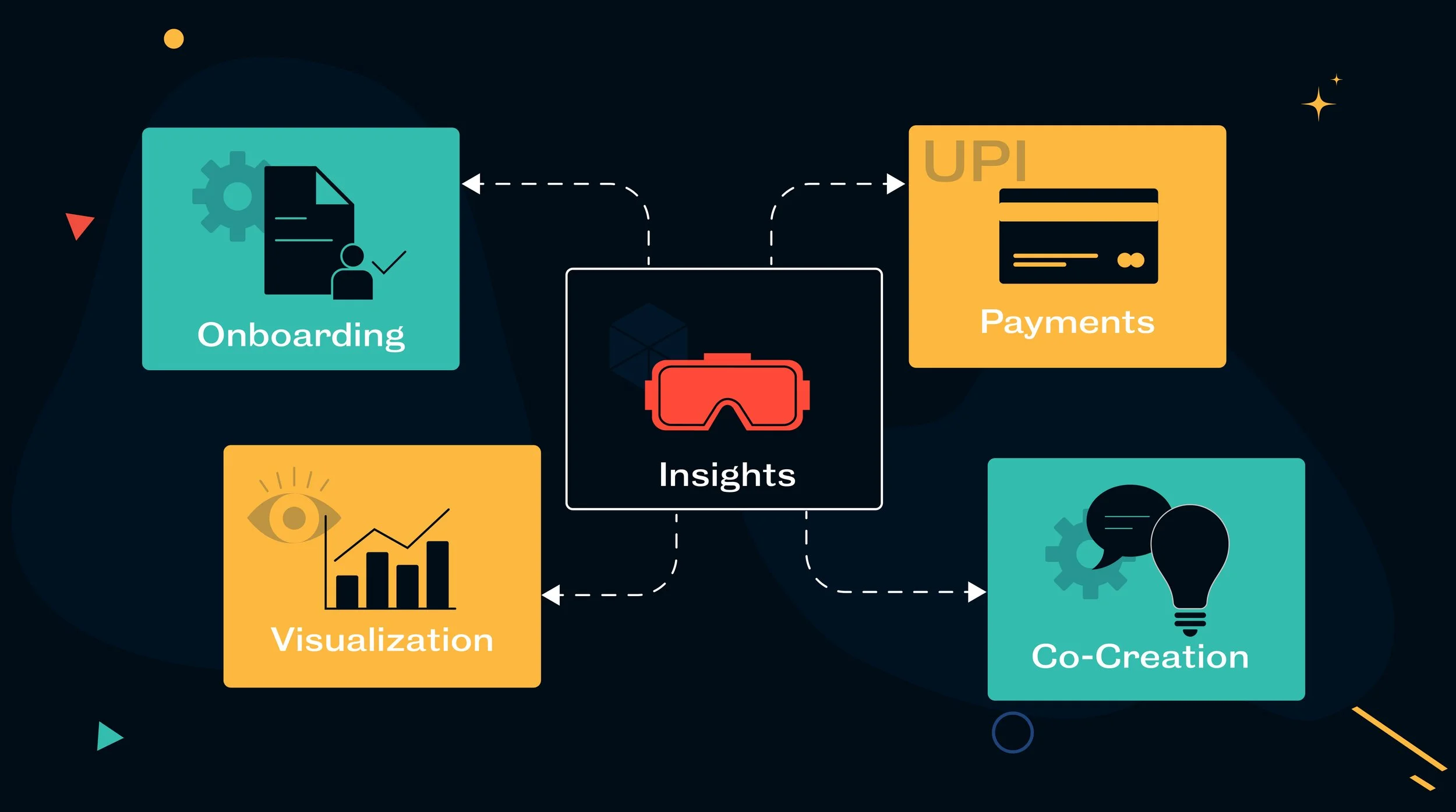
Designing Tomorrow (Part 2): Elephant’s Digital Action Plan
Designing Tomorrow (Part 1): Why Digital Experiences Need a New Blueprint
Note: the blog page layout needs to be set to “Basic Grid Blog” through the page’s settings.
Note: the blog page layout needs to be set to “Basic Grid Blog” through the page’s settings.

Note: the blog page layout needs to be set to “Basic Grid Blog” through the page’s settings.

Note: the blog page layout needs to be set to “Basic Grid Blog” through the page’s settings.

Note: the blog page layout needs to be set to “Basic Grid Blog” through the page’s settings.

Note: the blog page layout needs to be set to “Basic Grid Blog” through the page’s settings.

Note: the blog page layout needs to be set to “Basic Grid Blog” through the page’s settings.

Note: the blog page layout needs to be set to “Basic Grid Blog” through the page’s settings.

Ashish Deshpande is a M Des eq., Industrial Designer, trained at the National Institute of Design, Ahmedabad. He has been a practicing designer for over 34 years as co-founder of the multi-disciplinary Design Consultancy firm, Elephant.

Note: the blog page layout needs to be set to “Basic Grid Blog” through the page’s settings.

Note: the blog page layout needs to be set to “Basic Grid Blog” through the page’s settings.

Note: the blog page layout needs to be set to “Basic Grid Blog” through the page’s settings.

Note: the blog page layout needs to be set to “Basic Grid Blog” through the page’s settings.

Note: the blog page layout needs to be set to “Basic Grid Blog” through the page’s settings.

Note: the blog page layout needs to be set to “Basic Grid Blog” through the page’s settings.

Note: the blog page layout needs to be set to “Basic Grid Blog” through the page’s settings.

Note: the blog page layout needs to be set to “Basic Grid Blog” through the page’s settings.

Note: the blog page layout needs to be set to “Basic Grid Blog” through the page’s settings.

Note: the blog page layout needs to be set to “Basic Grid Blog” through the page’s settings.

Note: the blog page layout needs to be set to “Basic Grid Blog” through the page’s settings.


Framework for Managing Design