
The Design Paradox Part 2: Design Is No Longer the Differentiator.
Insights
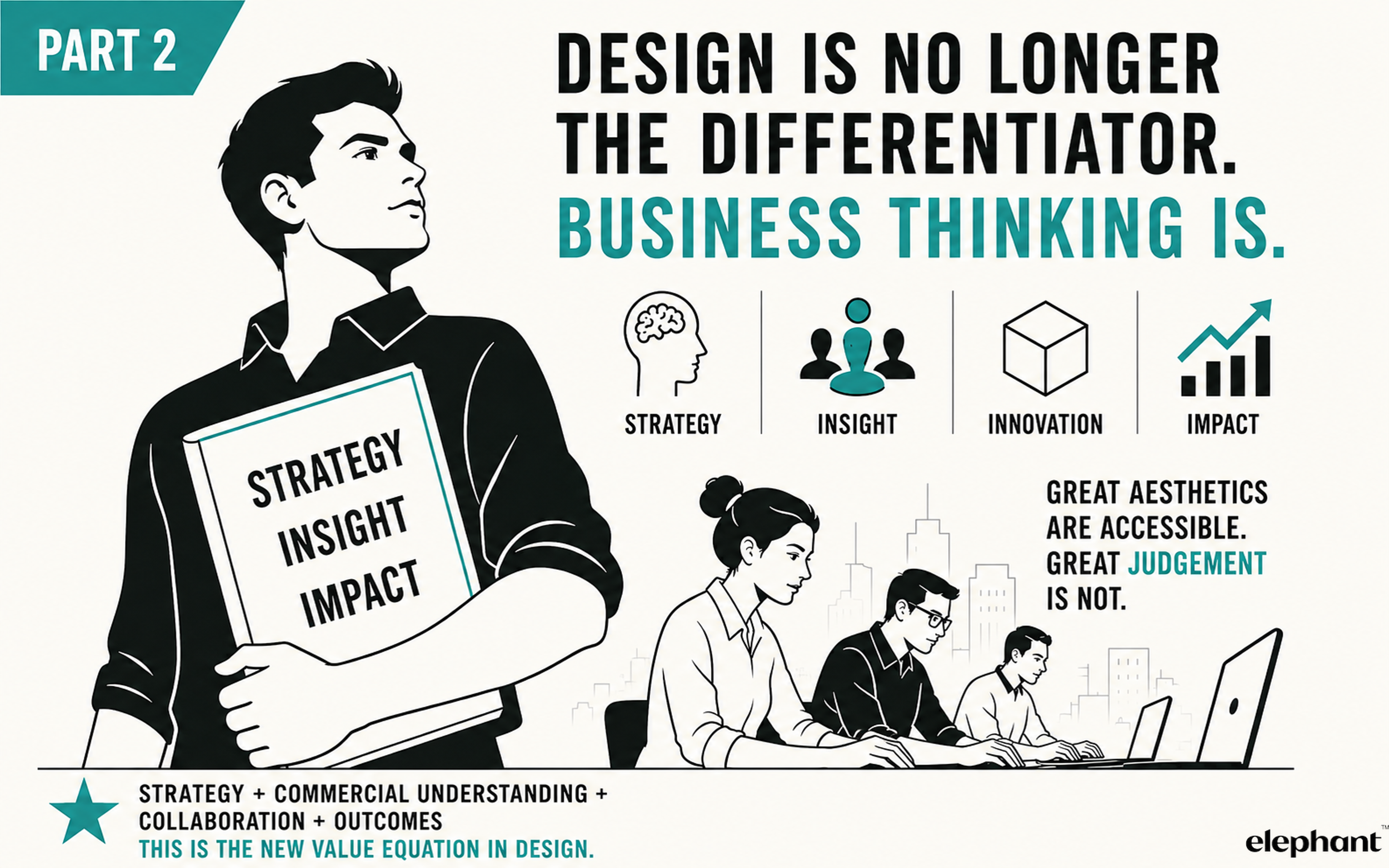
Visual execution is increasingly accessibleStrategic judgement creates greater valueDesign must shape business decisionsExperience alone is no longer enoughMultidisciplinary thinking is now essentialBusiness understanding makes designers valuable
🔊 Listen to this article!
Technology has permanently changed the economics of design.

AI can generate logos. Templates can build presentations. Software can produce images, interfaces and even packaging concepts in minutes.

Visual execution has become dramatically more accessible.

This changes where designers create value.

Today, clients are in the business of buying sound, strategic judgement.

The organisations creating disproportionate impact ensure that design shapes business decisions.

Consider brands such as Titan, Mahindra Electric Origin SUVs, Symphony, Zerodha, Razorpay, PaperBoat, WickedGud or Tata 1mg.

Their success is the integration of customer insight, business strategy, technology and execution. Design becomes part of the business model.

At the same time, another interesting shift is reshaping consulting. Since COVID, remote collaboration and the gig economy have dramatically expanded client choice.
Today a CEO/ CMO/ CTO can engage:
a century-old international consultancya specialised boutique studioan independent designeran AI-enabled creative team ora recent graduate with exceptional digital skills.
The playing field has never been flatter. Many organisations now deliberately combine experienced strategic advisors with younger, faster and more experimental creators. It’s an exciting model, though it also creates relentless competition. For designers, this means reputation alone is no longer enough.
Experience alone is no longer enough.
Execution alone is no longer enough. The winning proposition increasingly combines:
strategic & commercial thinkinguser sensingmultidisciplinary collaborationmeasurable outcomes.
The designer who understands customer satisfaction, pricing, manufacturing, customer acquisition, AI, sustainability and business models becomes exponentially more valuable than the designer who only delivers beautiful, stylised artefacts. Part 3 argues why India’s greatest design opportunity lies in manufacturing, craft and technology coming together.
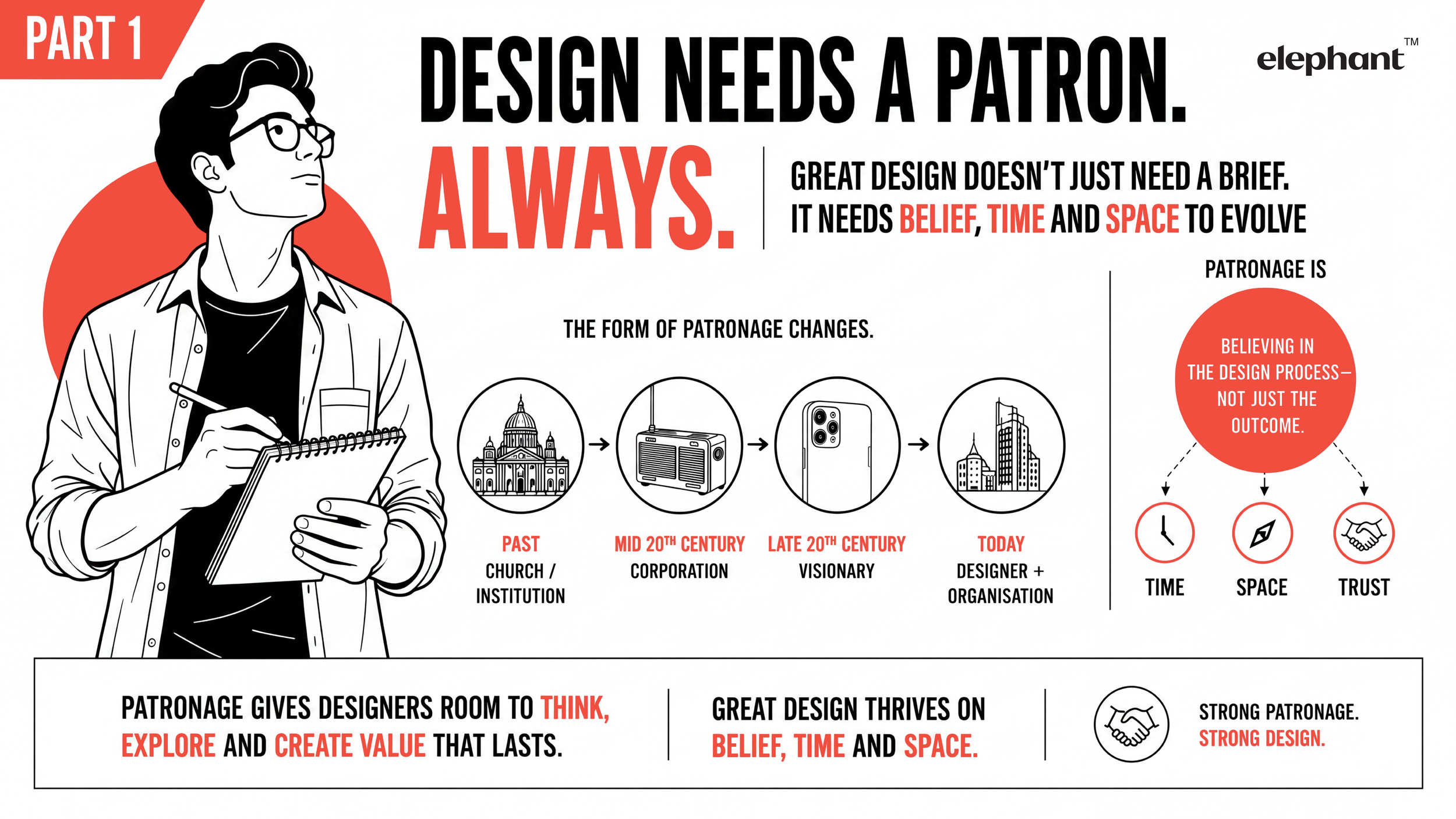
Design Needs a Patron
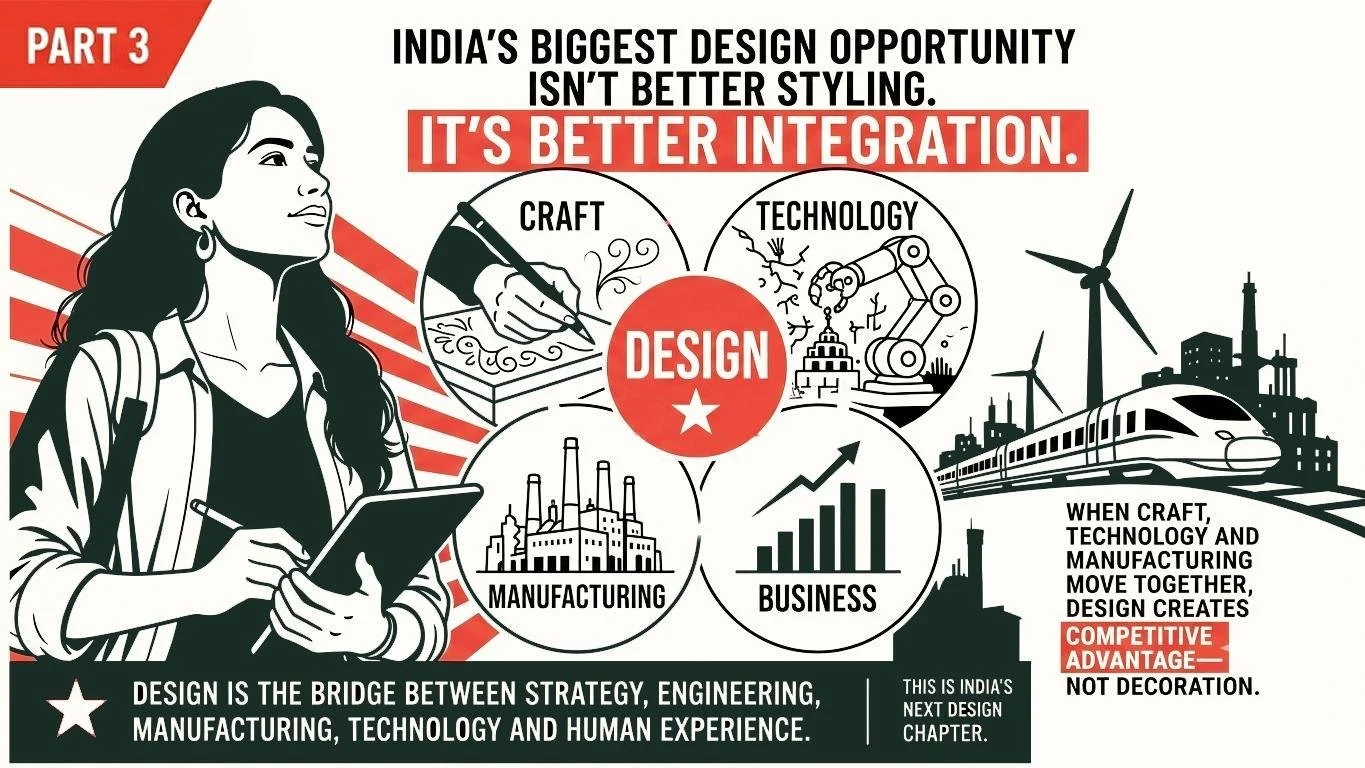
The Design Paradox - PART 3 India’s Biggest Design Opportunity Isn’t Better Styling. It’s Better Integration.
The Design Paradox - Part 2: Design Is No Longer the Differentiator
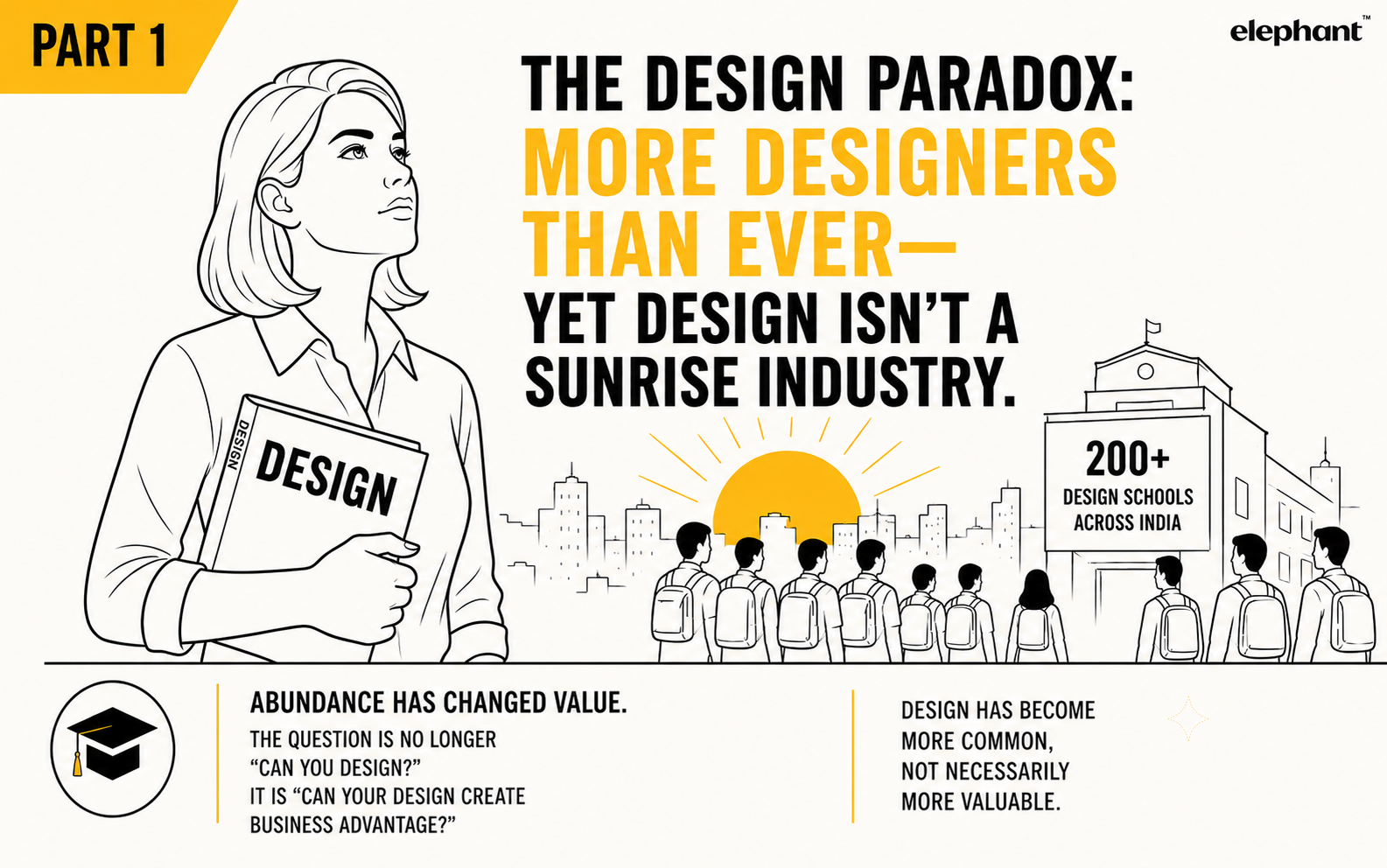
The Design Paradox - The Trajectory of India’s New Design Landscape
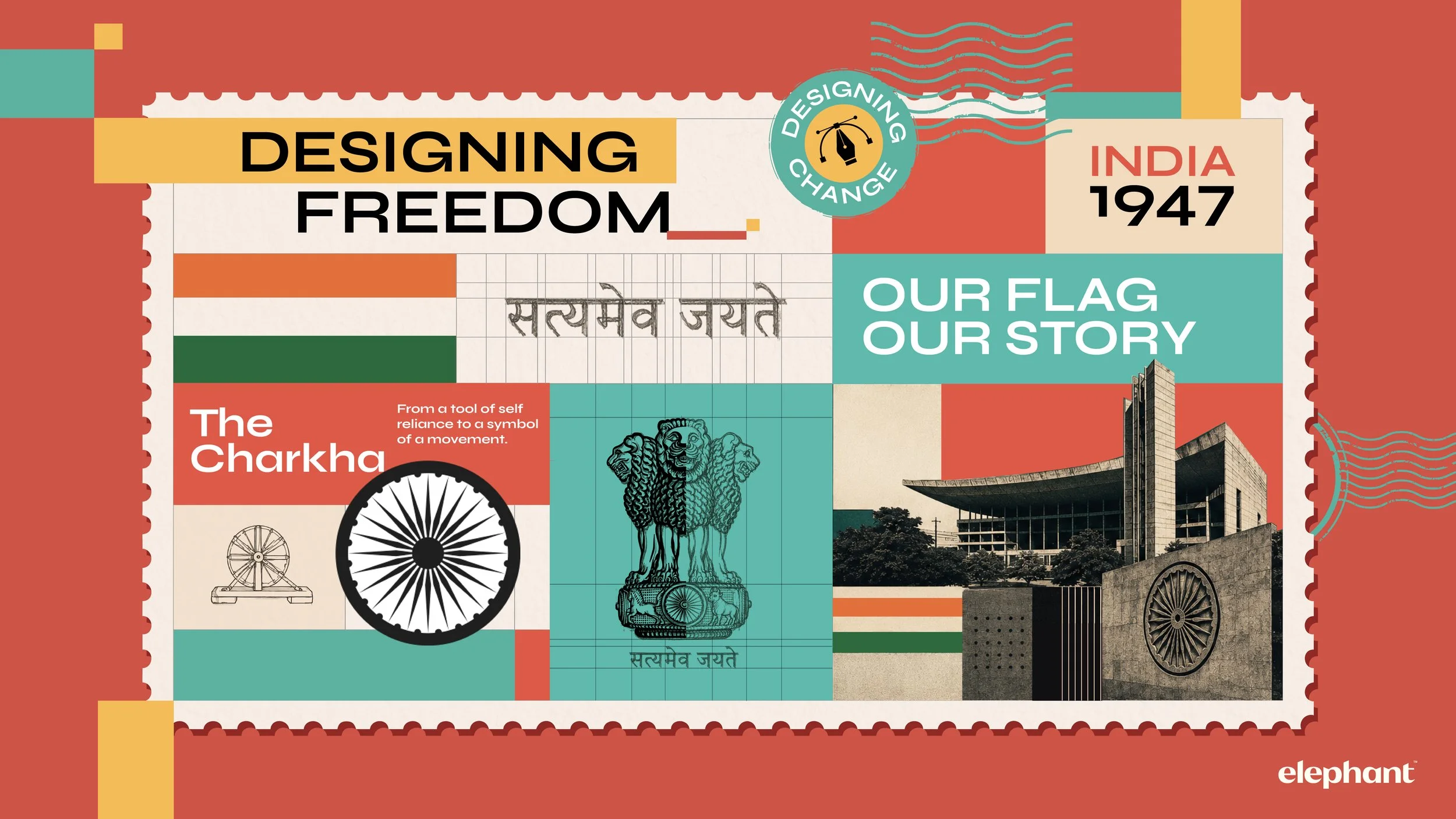
Designing Freedom

The Screen Is Not Enough: Why D2C Brands Are Moving Offline
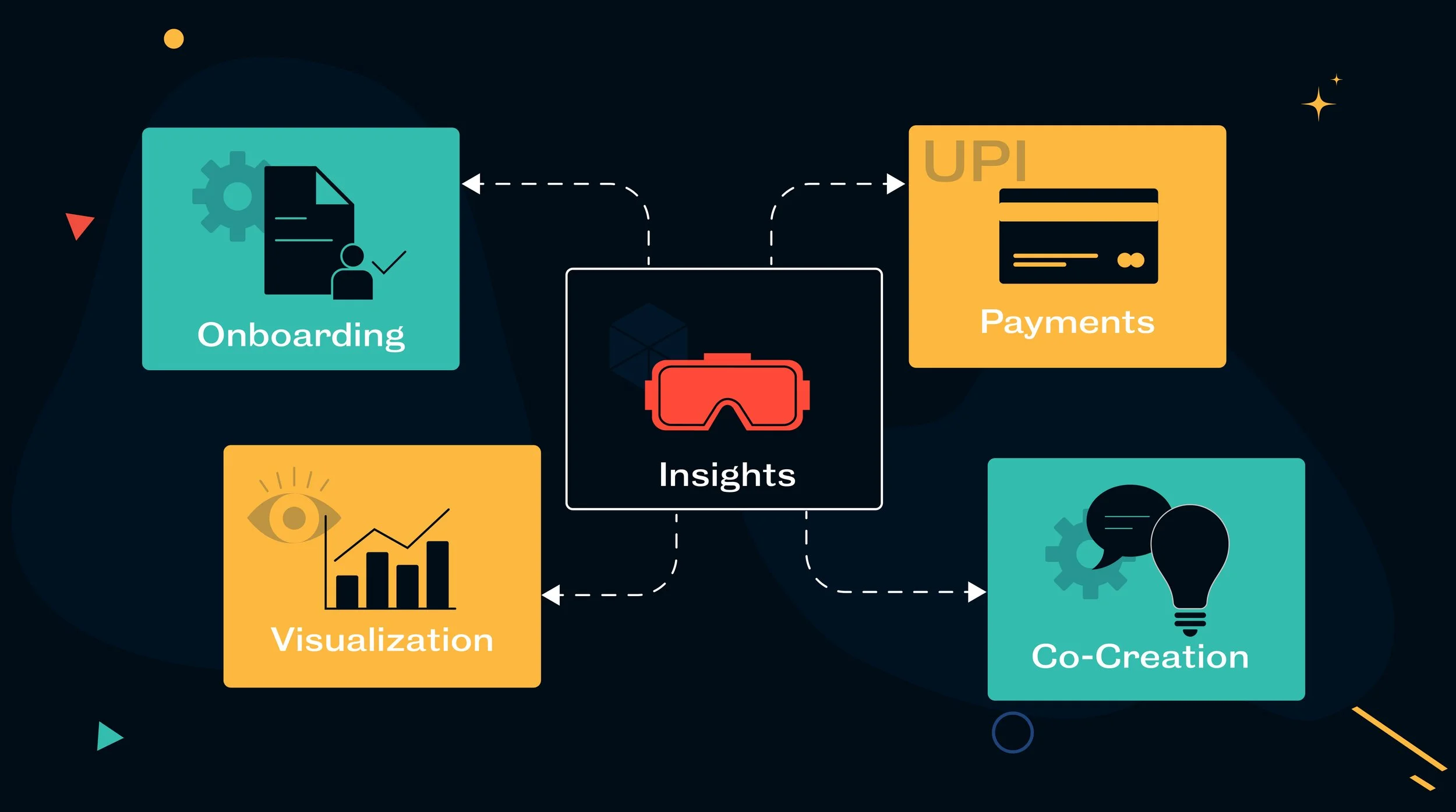
Designing Tomorrow (Part 2): Elephant’s Digital Action Plan
Designing Tomorrow (Part 1): Why Digital Experiences Need a New Blueprint
Note: the blog page layout needs to be set to “Basic Grid Blog” through the page’s settings.
Note: the blog page layout needs to be set to “Basic Grid Blog” through the page’s settings.

Note: the blog page layout needs to be set to “Basic Grid Blog” through the page’s settings.

Note: the blog page layout needs to be set to “Basic Grid Blog” through the page’s settings.

Note: the blog page layout needs to be set to “Basic Grid Blog” through the page’s settings.

Note: the blog page layout needs to be set to “Basic Grid Blog” through the page’s settings.

Note: the blog page layout needs to be set to “Basic Grid Blog” through the page’s settings.

Note: the blog page layout needs to be set to “Basic Grid Blog” through the page’s settings.

Ashish Deshpande is a M Des eq., Industrial Designer, trained at the National Institute of Design, Ahmedabad. He has been a practicing designer for over 34 years as co-founder of the multi-disciplinary Design Consultancy firm, Elephant.

Note: the blog page layout needs to be set to “Basic Grid Blog” through the page’s settings.

Note: the blog page layout needs to be set to “Basic Grid Blog” through the page’s settings.

Note: the blog page layout needs to be set to “Basic Grid Blog” through the page’s settings.

Note: the blog page layout needs to be set to “Basic Grid Blog” through the page’s settings.

Note: the blog page layout needs to be set to “Basic Grid Blog” through the page’s settings.

Note: the blog page layout needs to be set to “Basic Grid Blog” through the page’s settings.

Note: the blog page layout needs to be set to “Basic Grid Blog” through the page’s settings.

Note: the blog page layout needs to be set to “Basic Grid Blog” through the page’s settings.

Note: the blog page layout needs to be set to “Basic Grid Blog” through the page’s settings.

Note: the blog page layout needs to be set to “Basic Grid Blog” through the page’s settings.

Note: the blog page layout needs to be set to “Basic Grid Blog” through the page’s settings.


Framework for Managing Design