
Shaping the Designer – The Learner’s Gambit
Insights
Design school is only the starting point.Observation shapes a designer’s point of view.Sensibility develops professional judgement.Making is a form of thinking.A designer’s education never really ends.
🔊 Listen to this article!
How does a creative person become a designer?
The easy answer is: go to a design school! Ashish Deshpande shares his thoughts & insights
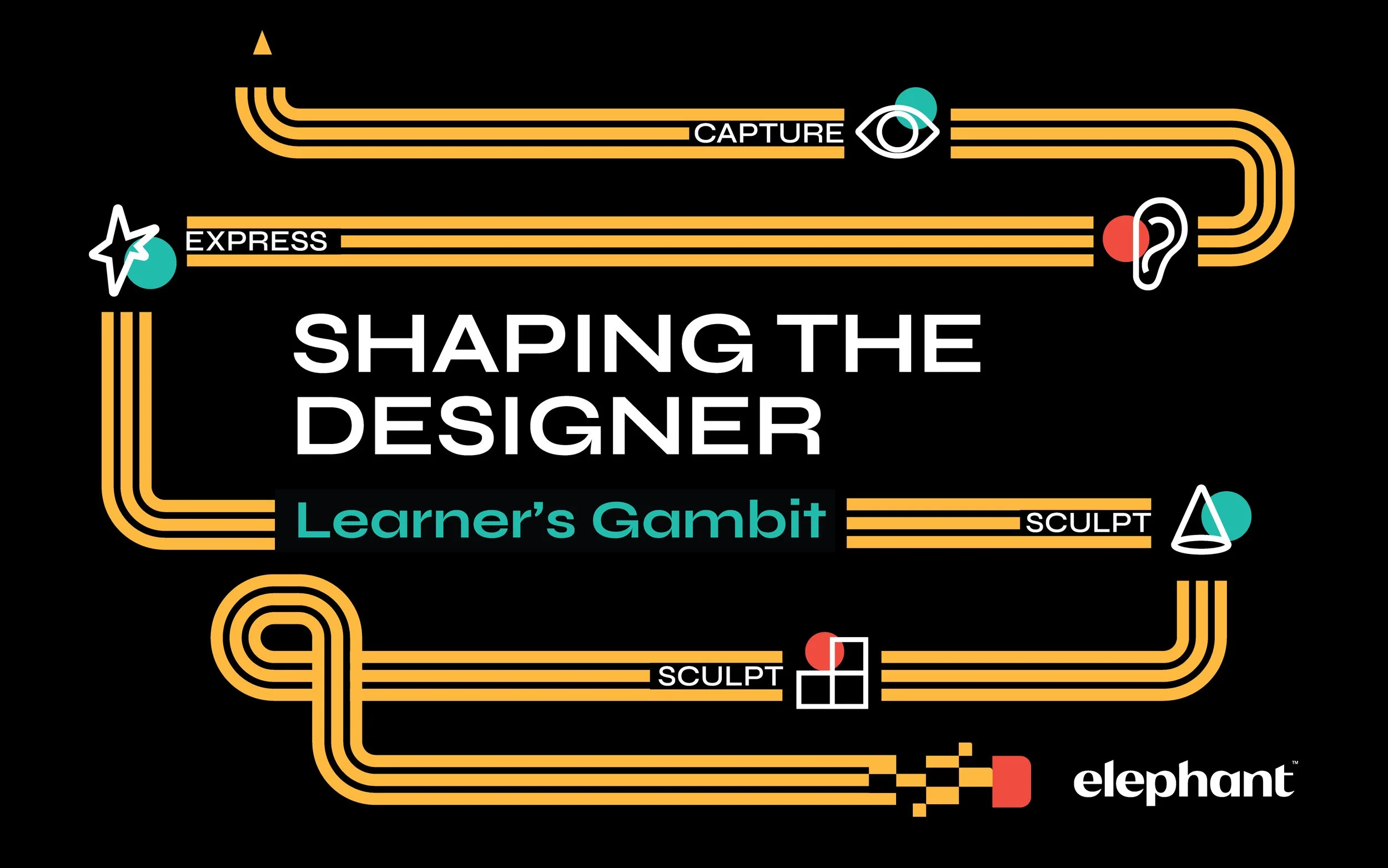
After 37 years of practising design, having studied at one of India’s finest design institutions, and having mentored, worked alongside and learnt from designers across generations, I have come to believe that design education is only the beginning – a start point of a journey. A design school gives you an environment, vocabulary and discipline. It cannot, by itself, make you a designer. That takes years of observation, practice, failure, creation, reflection and, importantly, exposure to the real world. Over the years, I have come to believe in five elements of design learning that need to be consistently honed if a creative person is to become a designer. 1. CAPTURE .
Before a designer can imagine something new, they need to notice what already exists. One simple skill is drawing. Drawing is not limited to the craft of drawing well. It is about training the eye, mind and hand to work together.

It is about capturing a face, a gesture, a room, machine, material, moment, conversation, a story, sound, words, a photograph or even human behaviour.
The act of capturing teaches us to observe. Observation, in turn, gives us a point of view.
A designer who doesn’t observe deeply will eventually design from assumptions. And assumptions are dangerous raw materials for the design process. 2. SENSE
Designers need to develop sensibility.
Feel the difference between rough and smooth. Warm and cold. Cheap and precious. Old and new. Loud and quiet. Local and global. Familiar and strange. They need to understand colour, texture, material, taste, sound, emotion, culture, fashion, history and aesthetics. But more importantly, they need to sense what is not being said.
The hesitation in a customer’s voice, discomfort behind a behaviour, an unspoken need, cultural nuance, emotional reactions. This is where empathy moves beyond a design-school exercise and becomes professional judgement. You cannot evolve sense and sensibility entirely from a spreadsheet or a brief. It has to be cultivated.
3. EXPRESS
Once a designer learns to observe, they need to learn to make others see what they see.

This is a very different skill.

Now sketches, drawing, montages become a language for expressing ideas, possibilities, scenarios, abstractions and imagined futures.

A designer should be able to put an idea on paper before it exists, make a client understand something that has never been made, visualise an experience that nobody has experienced, make an engineer curious about a possibility, make a business leader believe in an opportunity.

Beyond their status as mere illustrations, sketches are thinking tools.
4. SCULPT
I use the word sculpt deliberately. Designers need to understand form. And form exists everywhere.
In typography, in a letterform, a product, packaging, an interface, in architecture, on a screen, in a physical material or in motion. Sculpting and calligraphy are two tangible representations of form that allow a designer to understand the behaviour of a mass in 2, or 3 dimensions. While, sculpting teaches volume, balance, surface and physical presence, calligraphy can teach the relationship between stroke, rhythm, proportion and meaning. Same is true in the pixel land, where digital tools teach us to manipulate form in virtual space. The principle remains the same. Understand form by actually making it. Looking at beautiful things is not enough. Scoop it out, fill up the space, take it apart, make, change, and feel them.
5. BUILD
Finally, a designer must push themselves to build to work. Ideas are not design until they encounter reality.
Build an object, a package, a piece of code, an interface, a film, an interaction, a prototype or a movement. Build a system.
Work with a craftsman, a machine, an artist, an engineer, a programmer, a film maker, a manufacturer. Work together or alone. In his opinion, together is always better.
Understand materials, production, science, technology and constraints. Because the real world is where beautiful ideas are tested.
A designer who only knows how to present ideas is closer to a savvy marketer. However, someone who can take an idea into the world and make it work becomes an actual designer.
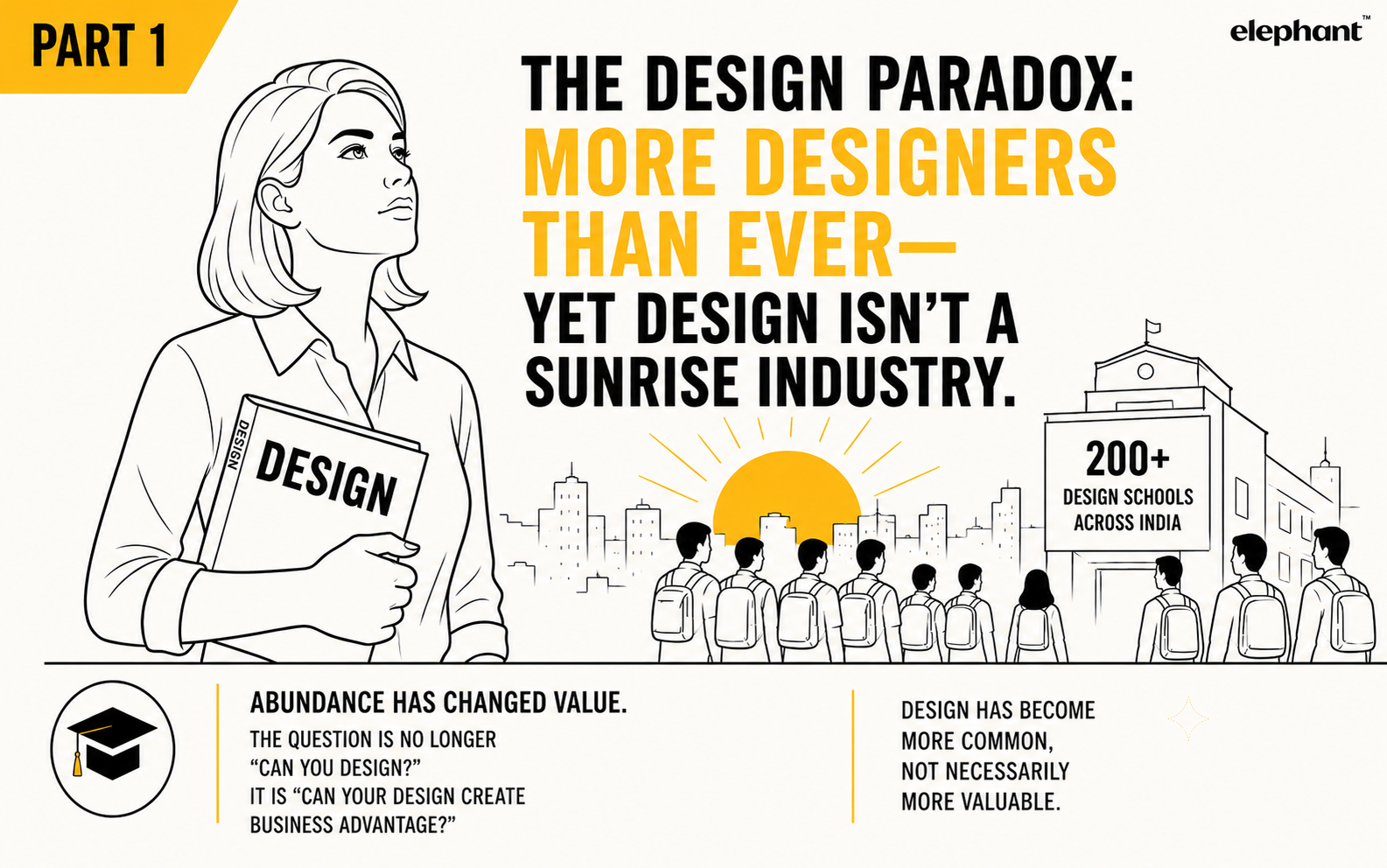
We can observe that design schools have the mandate of producing designers. But should they be prioritising something else? India is producing designers in numbers that would have been unimaginable when he was a student. That is definitely a wonderful development. But quantity makes the question of quality, and the depth of education even more important. He believes design education needs to continually ask: Are we just producing people who know design software? Or people who actually know how to see, sense, express, make and solve?
The five elements of Design Learning are simple: CAPTURE | SENSE | EXPRESS | SCULPT | BUILD
And none of them has a graduation day. A designer keeps practising them. For decades. So, the question for those who teach design is: are we teaching these capabilities deeply enough? And for those who commission design: what is your gambit when choosing the person or team you trust with your brand, product or business? How does one choose a designer to work along? It may be the person who can see something you cannot see, make you see it, and then help you make it real. Someone who can challenge your assumptions, work along with your team, articulate a point of view, understand the consequences of their decisions and make an abstract idea tangible and make it work. After 37 years, I realise that I have been practising these five elements of design, this learner’s gambit, throughout his student and professional life. And I am still learning.
Perhaps that is one of the great privileges of being a designer: you never really finish your education.
You just keep honing your eye, your mind, your hand, and your ability to make sense of the world.
What do you think? Is there a sixth principle? I’d love to hear perspectives from designers, design educators, CEOs and business leaders. 











Framework for Managing Design